Mark Twain Quotes
The Church has opposed every innovation and discovery from the day of Galileo down to our own time, when the use of anesthetics in childbirth was regarded as a sin because it avoided the biblical curse pronounced against Eve.
Samuel Langhorne Clemens, 1835-1910
Mark Twain, Writer, Founder, Anti-Imperialist League, Mark Twain, a Biography
Sourced by: Eigen's Political and Historical Quotations


Ingersoll was considered to be the greatest orator and political thinker of his day, but his overt atheistic views curtailed his elected political career.

The Church no longer believes this of course. Having learned from this unfortunate experience and Galileo’s persecution, today the Roman Catholic Church is one of the more advanced religious institutions in accepting modern science.

This quotation illustrates a way in which science is frequently at odds with politics. Our politicians realize the importance of scientific research to our standard of living, economy, and quality of life. So they want to support research and development programs. However, budgeting and planning for these in terms of expected or desired results is virtually impossible. So scientific research, especially basic research is not susceptible to the usual planning and monitoring that is so common and effective in construction projects or other applications of science and technology. It is hard to predict when and which scientists will have the next critical idea. It is very difficult to hold scientists or administrators accountable for scientific research results because of this factor. See {624876}.


For many people, especially, bright and educated people, science has been an escape from unstable, political situations.


Samuel Langhorne Clemens, 1835-1910

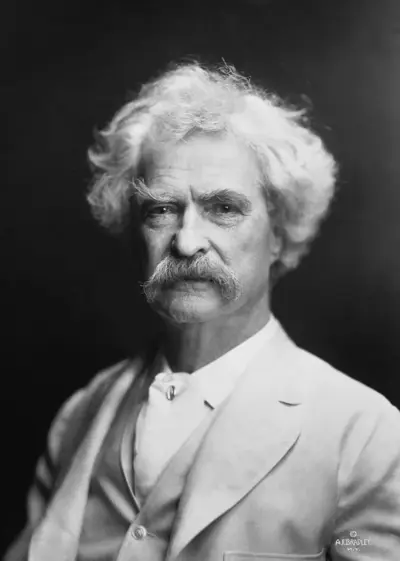
Samuel Langhorne Clemens, known by his pen name Mark Twain, was an American writer, humorist, entrepreneur, publisher, and lecturer. He was lauded as the "greatest humorist the United States has produced," and William Faulkner called him "the father of American literature". His novels include The Adventures of Tom Sawyer (1876) and its sequel, the Adventures of Huckleberry Finn (1884), the latter often called "The Great American Novel".
