Bartolome de las Casas Quotes
The Christians seized all the maize the locals of Nicaragua had grown for themselves and their own families and, as a consequence, some twenty or thirty thousand natives died of hunger, some mothers even killing their own children and eating them.
Casas, Bartolomé de las. A Short Account of the Destruction of the Indies. Translated by Nigel Griffin, Penguin Books, 1992.


The human rights abuses in the Belgian Congo were horrible. Natives who refused to work for the low wages were murdered or had their hands chopped off. The indigenous population was markedly reduced. Word of the atrocities started leaking out to Europe. It is not known whether the King really wanted any reform or just sent the instructions to cover himself. The instructions were not followed; the atrocities continued, and Leopold never took any steps to discipline his agents and minions. The Belgian Congo had the worst atrocities in the world until WWII.

While he fairly described the Spanish intentions, the reality which was not known at the time, was that most of the deaths in South America were caused by disease brought by the Spanish for which Europeans had some immunities and the natives of the New Word, none.


During the Irish potato famine, other crops continued to be exported from Ireland. Some argued that without the exports the Irish economy would totally collapse exacerbating the pain to Ireland, but many others disagreed and argued that all available food should be used for the people of the country. For his seditious activities he was sentenced to penal servitude for life. He escaped and came to America where he entered politics

Black Natives with property had voted and served on juries. This was abhorrent to the Afrikaners whom Rhodes wanted as political allies so he switched his position on native suffrage.


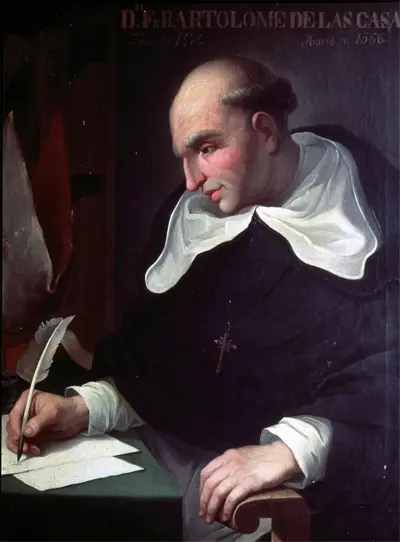
Bartolomé de las Casas was a 16th-century Spanish landowner, friar, priest, and bishop, famed as a historian and social reformer. He arrived in Hispaniola as a layman then became a Dominican friar and priest. He was appointed as the first resident Bishop of Chiapas, and the first officially appointed "Protector of the Indians". His extensive writings, the most famous being A Short Account of the Destruction of the Indies and Historia de Las Indias, chronicle the first decades of colonization of the West Indies. He described the atrocities committed by the colonizers against the indigenous peoples.
