Robert Bork Quotes
The choice of "fundamental values" by the [Supreme] Court cannot be justified. Where constitutional materials do not clearly specify the value to be preferred, there is no principled way to prefer any claimed human value to any other. The judge must stick close to the text and history, and their fair implications, and not construct any new rights.
Robert Bork, U. S. Solicitor General, Judge, U. S. Court of Appeals, Washington DC, Indiana Law Journal, 1971
Sourced by: Eigen's Political and Historical Quotations


This quotation is particularly important because it summarizes one of two opposite schools or thought regarding judicial interpretation of the Constitution that politicians have been arguing about since the Supreme Court first sat. The other is Original Intent where only the original intentions of the writers and ratifiers of the Constitution should be considered—assuming that it can be determined.


The Chief Justice at the time was an ultra-conservative judge, who together with his 8 colleagues—all conservative—had blocked much of the democratic and progressive legislation that the Congress had passed. FDR had a much different legal and philosophical view of the Constitution than the Chief Justice, and the court would declare much of his New Deal legislation, passed in the emergency of the Great Depression, unconstitutional. Almost all of those “unconstitutional” things were years later passed again and this time a more modern court found they were Constitutional.

Cummings was arguing against a Constitutional amendment. His alternative led to Roosevelt's court packing schema.

From this quotation, {615902} and {615901} it is clear that the framers of the Constitution intended the treaty making powers to be shared by the President and the Senate. In practice, in modern times treaties are usually initially negotiated by diplomats under the supervision of the President and the Senate gets to concur or not in the ratification process. However, there have been a number of treaty failures including the League of Nations where the lack of coordination has resulted in a situation where the Senate had to accept or reject something which the President had negotiated and the Senate rejected the treaty.

He uses the term, “Non-interpretivism”, in a judge’s decision to indicate a judge who does not accept the interpretation of the Constitution as written and intended by the framers. His bias is a conservative one and this is how he views decisions that he does not like. When liberals see an opinion with which they do not agree, they also very often accuse the judge of activism and not adhering to the framer’s intentions. Generally it is a question of “whose ox is gored?”

There are some Americans who believe that the courts should look to the original intent of the framers of the Constitution to determine the constitutionality of a law. Most jurists believe that original intent is but one factor that should influence the decision.


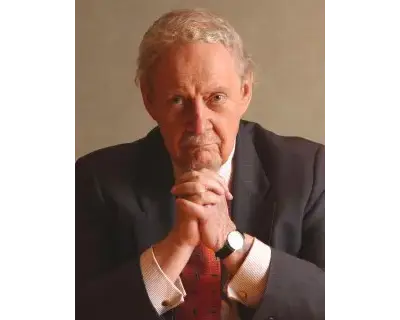
Robert Heron Bork was an American judge, government official, and legal scholar who served as the Solicitor General of the United States from 1973 to 1977. A professor at Yale Law School by occupation, he later served as a judge on the influential U.S. Court of Appeals for the D.C. Circuit from 1982 to 1988. In 1987, President Ronald Reagan nominated Bork to the U.S. Supreme Court, but the U.S. Senate rejected his nomination.
