Sandra Day O'Connor Quotes
As a judge, it is not my function to develop public policy.
Sandra Day O'Connor, U. S. Supreme Court Justice, Washington Post, September 10, 1981
Sourced by: Eigen's Political and Historical Quotations


The New Deal liberal Democrats had complained that the Supreme Court was making national policy and law and not interpreting law. They tried to pack the Supreme Court by adding more justices who would be more sympathetic to the New Deal. (See {587549}.) At the beginning of the 21st century it was the conservative Republicans who were making the same claim that the Supreme Court was making law and not interpreting it. The pattern seems to be when the court votes for your side, they are interpreting the law. When they vote for the other side, they are activist—making law improperly.


The government of Pakistan regarded this as seditious. The Government can fire judges at will and the military has the right to convene its own courts and try Pakistani civilians for certain alleged crimes by removing their cases from the civilian courts. Even when a Pakistani judge is not intimidated by the government or the military, the Islamic extremist fanatics often assassinate any public official who any one of thousands of fanatics feels is anti-Islamic.

He served on a Supreme Court that was as close to political as any had ever been. Hence his great concern.
In 2002 the corrupt Indonesian Courts ruled that a very solvent Canadian company Manulife was bankrupt so that others could get control. The international financial and political community wanted the Indonesian government to intervene and reverse the rulings, but historically the courts had no independence and had been tools of the government.


Hatch was the chairman of the Senate Judiciary Committee at the time.


Jefferson, like most Presidents and ex-presidents, had his concerns about the judiciary and judicial checks, especially of the Executive Branch.


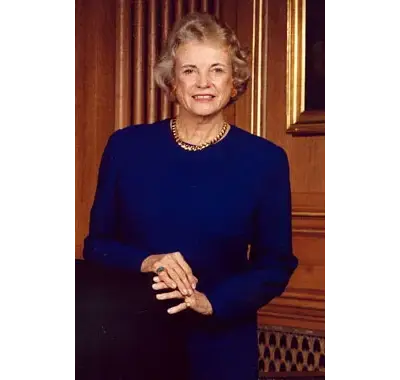
Sandra Day O'Connor is a retired attorney and politician who served as the first woman associate justice of the Supreme Court of the United States from 1981 to 2006. She was the first woman nominated and confirmed. Nominated by President Ronald Reagan, she was considered the swing vote for the Rehnquist Court and the beginning of the Roberts Court.
