James P. Cannon Quotes
The capitalists—all kinds—fear and hate even his dead body! The doors of our great democracy are open to many political refugees, of course. All sorts of reactionaries; democratic scoundrels who betrayed and deserted their people; monarchists, and even fascists—they have all been welcomed in New York harbor. But not even the dead body of the friend of the oppressed could find asylum here!
Trotsky had been assassinated by Stalin’s agents in Mexico. Trotsky supporters in the U. S. wanted to bring his body here for burial. President Roosevelt, acting upon the advice of Secretary Cordell Hull, refused permission as it would alienate Stalinist Russia, the then bastion of defense against Hitler and the Nazis. There is no better example of the old adage {592416}.
James P. Cannon, 1890-1974, National Chairman, Workers Party of America, Obituary, Leon Trotsky Memorial Meeting, Diplomat Hotel, New York City, August 28, 1940
Sourced by: Eigen's Political and Historical Quotations

Dodd, in Berlin from 1933 to the onset of WWII, was able to see first hand what Hitler and the Nazi Movement was really like, Although he for the United States and Churchill for England warned early on, the politics of the times would not allow any action to stop or curtail Hitler. America, in particular, had a strong isolationist Republican wing and in addition, a small but loud core of pro Fascist, Hitler admirers such as Charles Lindburg, Father Coughlin, and Henry Ford. America had virtually no serious military capacity at the time, and with the Depression, FDR had all he could do to just gradually build up the military. By the time the Democracies realized that Dodd and Churchill were right, it was too late to prevent WWII. Dodd died in 1940 just when it was clear that he had been right.


There were few if any consumer protection laws in those days and many wealthy aristocrats made their money by taking advantage of the poor. They were the landowners, bankers, financiers and often the industrialists. Shaw was a sarcastic social critic and this is a typical line he gave his upper class characters. Today, we have more controls on business and finance, and many wealthy business people have gotten that way by providing great value to the consumers and being honest. However, we still have large numbers of wealthy members of society who do make their money from the poor and middle class by unethical and often illegal means. In the aftermath of the Meltdown of 2008. hundreds of thousands of the homes of the working poor and middle class were foreclosed by the major banks forging the legal documentation for the foreclusures. Millions of consumer contracts are issued that even a PhD cannot understand the terms of without special legal and financial training. There is even a legal definition of a salesperson lying to make a sale which is so commonplace that our law excuses it and calls it "puffing". However, there has been over time, improvement over Shaw's era.

This first meeting was held in a girls’ school. One of the delegates was a young library assistant and school teacher, Mau Tse Tung.


This quotation and other material were so radical and inflammatory that Calhoun wrote and published this anonymously.

What the Supreme Leader did not understand was that the very books that he recommended to see the faults of America were the very instruments that influenced the American reformers to change and improve America. And the lesson he missed is that he would not allow authors to heavily criticize the current Iran and have a wide audience so that Iran could improve. His examples were very well chosen. The lesson is the wrong one however.


There were many British and American capitalists, like Lindbergh, who were great admirers of Hitler and Mussolini and supported the Fascists.

15 years later the lesson hit hard with the Meltdown of 2008 and the Great Recession where many developed counties became servants to capitalism again and struggled to regain control.

3rd Earl Russell of Kingston. He favored and argued for a middle ground of a capitalistic socialism or a socialized capitalism, which is what most democracies became.

This is one of the more passionate and colorful descriptions of Conservatives in the political literature. The conservative party were called Orangists as they were supporters of the monarchy of William V, Prince of Orange. As in modern times the conservatives included the upper classes, business people, religious advocates. The political conservatives were passionate, respected established authority, and in general, reactionary. The tended even then to flip-flopping as the conservatives had several factions--business conservatives, religious conservatives, monarchial conservatives, authoritarian conservatives and others. Depending on which faction was most powerful at the time, conservatives might advocate one position and change later when another faction was in control. Valckenaer also had some choice words to reflect his disdain for them. It is noteworthy that this description could describe political conservatives in almost any time period, in any culture. For example, it might have been a liberal writing about the Tea Party Republicans in 2014.


Bryan's concept of struggling masses included farmers and small businessmen.

Helms was then a young agent of the Office of Strategic Services (OSS) in Berlin.


A number of Americans had asked for and were granted political asylum. Many were left-wing dissidents, but a number were Southern Black Civil Rights workers who had been framed with trumped up charges by racist states and communities.

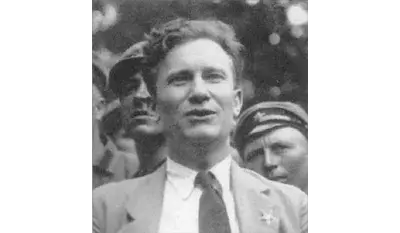
- Born: February 11, 1890
- Died: August 21, 1974
- Nationality: American
- Profession: Activist
James Patrick Cannon was an American Trotskyist and a leader of the Socialist Workers Party.
