Henry Miller Quotes
The blind lead the blind. It's the democratic way.
Henry Miller, 1891-1980, Writer, The Air Conditioned Nightmare, 1941
Sourced by: Eigen's Political and Historical Quotations


His criticism of the majority is not that they should not prevail, but that they almost never think that they might be wrong.

This was much more the case in 1840 when this quotation was written. Since then, a much higher proportion of American society has become educated, and the cultures that American immigrants have come from had multiplied. Publications abounded and after radio and television there were more attacks on American majority positions. The major change came with radio call in talk shows, similar TV shows and then the Internet provided a painless way to publicly go against majority opinion. By the first decade of the 21st century, movements of majority rejectionists such as the Tea Party and the Occupy Movement were thriving and “futile contests” received much public attention and showed that there were others with the non-majority views who made it socially acceptable to be outside the norms of the majority.


This was his version of the governing body of a republican commonwealth. His assumption was that the ablest men would be the nobility, the educated and religious (Catholic) elite.

Bartolo was the most famous legal expert of his day and for many years thereafter as he died at the age of 44—the height of his career. In Italy, Spain and other nations of Europe there were statutes passed that said if there was no precedent in Roman Law, the writings of Bartolo should dictate the law.


most activist of non-Zionist communal agencies of British Jewry


It was his message about the possibilities about the atomic bomb that Albert Einstein transmitted to FDR, leading to American development of the bomb.
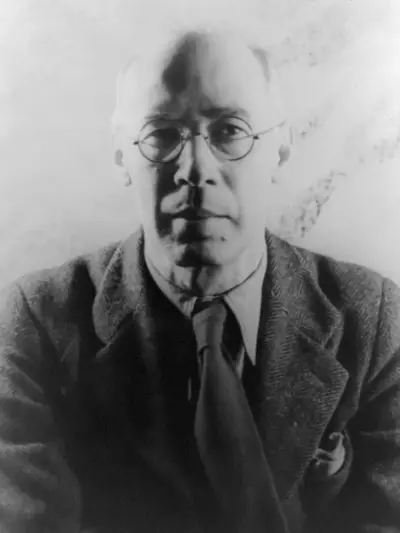
Henry Valentine Miller was an American writer and artist. He was known for breaking with existing literary forms and developing a new type of semi-autobiographical novel that blended character study, social criticism, philosophical reflection, stream of consciousness, explicit language, sex, surrealist free association, and mysticism. His most characteristic works of this kind are Tropic of Cancer, Black Spring, Tropic of Capricorn and The Rosy Crucifixion trilogy, which are based on his experiences in New York and Paris (all of which were banned in the United States until 1961). He also wrote travel memoirs and literary criticism, and painted watercolors.
