Alexis de Tocqueville Quotes
When an opinion has taken root in a democracy and established itself in the minds of the majority, it afterward persists by itself, needing no effort to maintain it since no one attacks it. Those who at first rejected it as false come in the end to adopt it as accepted, and even those who still at the bottom of their hearts oppose it, keep their views to themselves, taking great care to avoid a dangerous and futile contest.
This was much more the case in 1840 when this quotation was written. Since then, a much higher proportion of American society has become educated, and the cultures that American immigrants have come from had multiplied. Publications abounded and after radio and television there were more attacks on American majority positions. The major change came with radio call in talk shows, similar TV shows and then the Internet provided a painless way to publicly go against majority opinion. By the first decade of the 21st century, movements of majority rejectionists such as the Tea Party and the Occupy Movement were thriving and “futile contests” received much public attention and showed that there were others with the non-majority views who made it socially acceptable to be outside the norms of the majority.
Alexis de Tocqueville, 1805-1859, French Foreign Minister & Writer, Democracy in America, Volume II, 1840
Sourced by: Eigen's Political and Historical Quotations


1st Baron Lytton of Knebworth


See Otis Singletary for a similar modern view


An excellent example of this occurred in the first decades of the 21st century. At the beginning if the century, the majority of Americans were clearly opposed to the idea of same-sex / gay marriage. By 2008, the population was evenly split, for and against. By 2014 the majority of Americans were clearly in favor of same-sex marriage and it had been legalized in more than a dozen states.


Earl of Roscommon


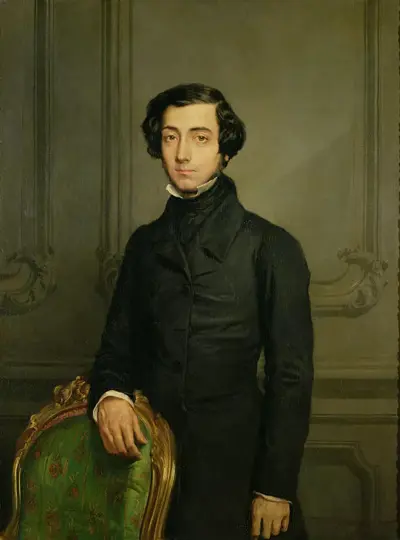
Alexis Charles Henri Clérel, comte de Tocqueville, colloquially known as Tocqueville (/ˈtɒkvɪl, ˈtoʊk-/), was a French aristocrat, diplomat, political scientist, political philosopher and historian. He is best known for his works Democracy in America (appearing in two volumes, 1835 and 1840) and The Old Regime and the Revolution (1856). In both, he analysed the improved living standards and social conditions of individuals as well as their relationship to the market and state in Western societies. Democracy in America was published after Tocqueville's travels in the United States and is today considered an early work of sociology and political science.
