Henry Miller Quotes
The difference between being out of step with a dictator and being out of step with the democratic majority is practically negligible. The important thing is to be in step.
Henry Miller, 1891-1980, Writer, The Air Conditioned Nightmare, 1941
Sourced by: Eigen's Political and Historical Quotations


1st Baron Lytton of Knebworth

With so many revolutionary rulers of new nations suppressing all opposition, the history of Ataturk and Turkey is unique. Ataturk was so popular and his People’s Party so successful that there was no opposition and Turkey had one party rule. However, Ataturk was determined to have Turkey become a parliamentary democracy as good as the Western nations of Europe. So a tradition of multi-party democracy was needed. So Ataturk actually went to his friend Fethi Okyar and asked him to start an opposition party and oppose the government. Fethi was a strong supporter of the revolution and generally was in concurrence with Ataturk and the People’s Party on everything. Ataturk however convinced him that they had to start a tradition that would take Turkey through the future, and he did create a new party-- Serbest Cumhuriyet Fırkası (Liberal Republican Party) and worked hard to find differences with the People’s Party and the Government. One immediate contribution was the oversight that the new party provided—a strong tradition that exists to this day in Turkey.


Arguing the need to limit the power of the legislature:


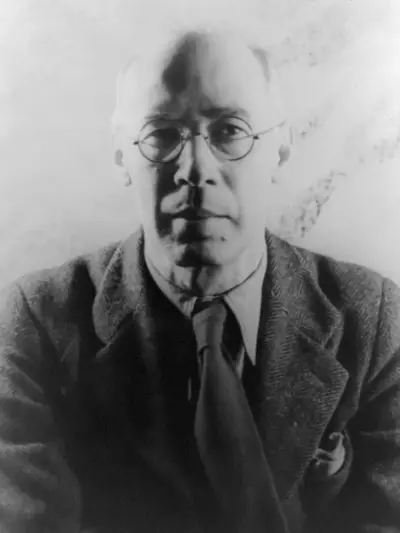
Henry Valentine Miller was an American writer and artist. He was known for breaking with existing literary forms and developing a new type of semi-autobiographical novel that blended character study, social criticism, philosophical reflection, stream of consciousness, explicit language, sex, surrealist free association, and mysticism. His most characteristic works of this kind are Tropic of Cancer, Black Spring, Tropic of Capricorn and The Rosy Crucifixion trilogy, which are based on his experiences in New York and Paris (all of which were banned in the United States until 1961). He also wrote travel memoirs and literary criticism, and painted watercolors.
