Max Weber Quotes
In a democracy the people choose a leader in whom they trust. Then the chosen leader says, 'Now shut up and obey me.' People and party are then no longer free to interfere in his business.
Mommsen, Wolfgang J. Max Weber and German Politics, 1890-1920, translated by Michael S. Steinberg, University of Chicago Press, 1984, p. 392.


With so many revolutionary rulers of new nations suppressing all opposition, the history of Ataturk and Turkey is unique. Ataturk was so popular and his People’s Party so successful that there was no opposition and Turkey had one party rule. However, Ataturk was determined to have Turkey become a parliamentary democracy as good as the Western nations of Europe. So a tradition of multi-party democracy was needed. So Ataturk actually went to his friend Fethi Okyar and asked him to start an opposition party and oppose the government. Fethi was a strong supporter of the revolution and generally was in concurrence with Ataturk and the People’s Party on everything. Ataturk however convinced him that they had to start a tradition that would take Turkey through the future, and he did create a new party-- Serbest Cumhuriyet Fırkası (Liberal Republican Party) and worked hard to find differences with the People’s Party and the Government. One immediate contribution was the oversight that the new party provided—a strong tradition that exists to this day in Turkey.


Historically, most dictators have announced their worst intentions and in many cases were not believed by much of the world who then learned that they had made a serious error.


This is the argument—an essence of Fascism—of every dictator from Julius Caesar onward. See {640792} for more of his views on dictators.


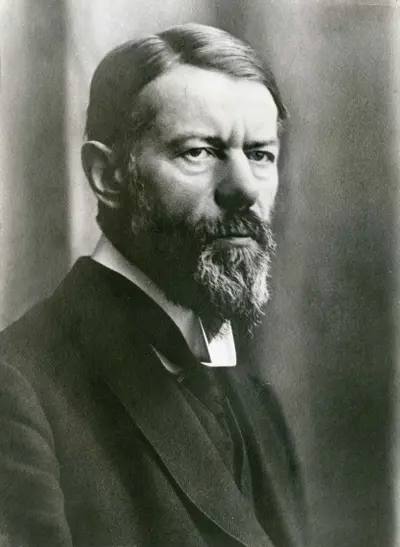
Maximilian Karl Emil Weber was a German sociologist, historian, jurist, and political economist, who is regarded among the most important theorists on the development of modern Western society. His ideas would profoundly influence social theory and social research. Despite being recognized as one of the fathers of sociology, along with Auguste Comte and Émile Durkheim, Weber never saw himself as a sociologist, but as an historian.
