Samuel Gompers Quotes
Socialism holds nothing but unhappiness for the human race. It destroys personal initiative, wipes out national pride ... and plays into the hands of the autocrats.... Socialism is the end of fanatics, the sophistry of so-called intelligentsia, and it has no place in the hearts of those who would secure and fight for freedom and preserve democracy.
Samuel Gompers, 1850-1924, President, American Federation of Labor, Seventy Years of Life and Labor, 1925
Sourced by: Eigen's Political and Historical Quotations


With so many revolutionary rulers of new nations suppressing all opposition, the history of Ataturk and Turkey is unique. Ataturk was so popular and his People’s Party so successful that there was no opposition and Turkey had one party rule. However, Ataturk was determined to have Turkey become a parliamentary democracy as good as the Western nations of Europe. So a tradition of multi-party democracy was needed. So Ataturk actually went to his friend Fethi Okyar and asked him to start an opposition party and oppose the government. Fethi was a strong supporter of the revolution and generally was in concurrence with Ataturk and the People’s Party on everything. Ataturk however convinced him that they had to start a tradition that would take Turkey through the future, and he did create a new party-- Serbest Cumhuriyet Fırkası (Liberal Republican Party) and worked hard to find differences with the People’s Party and the Government. One immediate contribution was the oversight that the new party provided—a strong tradition that exists to this day in Turkey.

De Tocqueville was generally concerned about what he saw as an inherent conflict between freedom and equality. Efforts to produce equality can lead in some cases to impingements on some freedoms or rights. Unlimited free rights can produce inequality and a de facto autocracy. Even in modern times America is struggling to find a proper balance.


This is one of the more passionate and colorful descriptions of Conservatives in the political literature. The conservative party were called Orangists as they were supporters of the monarchy of William V, Prince of Orange. As in modern times the conservatives included the upper classes, business people, religious advocates. The political conservatives were passionate, respected established authority, and in general, reactionary. The tended even then to flip-flopping as the conservatives had several factions--business conservatives, religious conservatives, monarchial conservatives, authoritarian conservatives and others. Depending on which faction was most powerful at the time, conservatives might advocate one position and change later when another faction was in control. Valckenaer also had some choice words to reflect his disdain for them. It is noteworthy that this description could describe political conservatives in almost any time period, in any culture. For example, it might have been a liberal writing about the Tea Party Republicans in 2014.


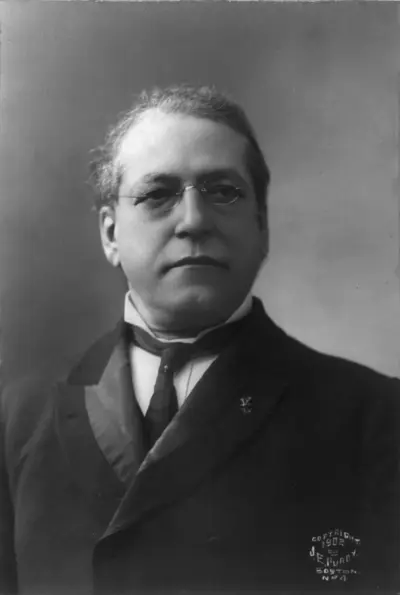
Samuel Gompers was a British-born American cigar maker, labor union leader and a key figure in American labor history. Gompers founded the American Federation of Labor (AFL), and served as the organization's president from 1886 to 1894, and from 1895 until his death in 1924. He promoted harmony among the different craft unions that comprised the AFL, trying to minimize jurisdictional battles. He promoted through organization and collective bargaining, to secure shorter hours and higher wages, the first essential steps, he believed, to emancipating labor. He also encouraged the AFL to take political action to "elect their friends" and "defeat their enemies". He mostly supported Democrats, but sometimes Republicans. He strongly opposed Socialists. During World War I, Gompers and the AFL openly supported the war effort, attempting to avert strikes and boost morale while raising wage rates and expanding membership.
