Thomas Paine Quotes
The balance of power is the scale of peace.
Paine, Thomas. Prospects on the Rubicon. J. Debrett, 1787, p. 32.

Hobson, like Mark Twain in America, was a major critic of imperialism.


The Republican controlled Senate had turned down the ratification of the League of Nations presented by Democratic President Wilson, and looked like they would turn down any international treaty even if presented by a Republican President. This statement allowed the treaty ratification by only a few votes. However, after that the Senate turned down our participation in the Permanent Court of Arbitration at the Hague. See {640099}.


1st Earl Baldwin of Bewdley. Chamberlain was about to leave for the Munich Conference where his appeasement emboldened Hitler and the Germans and dashed all hope of peace. Baldwin was out of office, but his support of the Munich appeasement changed his image from that of a popular statesman, to a craven appeaser. See {626930} for Churchill’s view of Baldwin.


Actually it was the United States which insisted in the veto which required consensus of the great powers of the time. It was Russia which ended up using it far more often than any other nation.


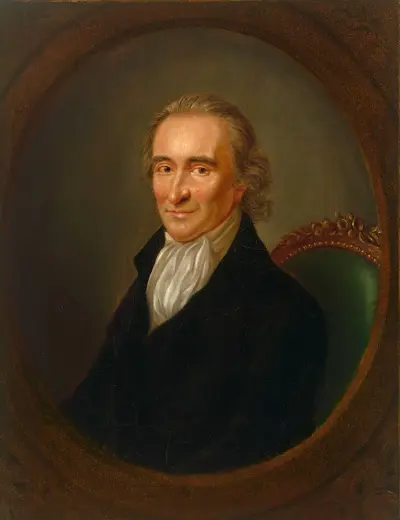
Thomas Paine was an English-born American political activist, philosopher, political theorist, and revolutionary. He authored Common Sense (1776) and The American Crisis (1776–1783), the two most influential pamphlets at the start of the American Revolution, and helped inspire the patriots in 1776 to declare independence from Great Britain. His ideas reflected Enlightenment-era ideals of transnational human rights. Historian Saul K. Padover described him as "a corsetmaker by trade, a journalist by profession, and a propagandist by inclination".
