Henry L. Stimson Quotes
…the bad judgment which is going on in the campaign is beyond all words, but the people of the country are in a humor where they don’t want to hear any reason…They want a change, and I think they are going to get it…
Hoover had to cope with the Great Depression. His administration was hapless in improving the economy as he was in a philosophical bind in that he was opposed in principle to doing almost anything that would help the situation. He just did not believe that government should engage in the activities that were necessary. His 1932 campaign had him trying to explain his thinking as to why government should not do much. Stimson and many other Republicans disagreed as so many Americans were suffering so badly. However, most publicly supported their party’s President even as many had private misgivings. Hoover was thrown out of office in an FDR landslide win. His policies government activist policies and programs improved the economy but it tool almost a decade to recover.
Henry L. Stimson, 1867-1950, U. S. Secretary of State (Republican), U. S. Secretary of War, Governor General, Philippine Islands, Diary, September 22, 1932
Sourced by: Eigen's Political and Historical Quotations

Hoover had to cope with the Great Depression. His administration was hapless in improving the economy as he was in a philosophical bind in that he was opposed in principle to doing almost anything that would help the situation. He just did not believe that government should engage in the activities that were necessary. When FDR assumed the Presidency, it still took him 8 years to create a recovery and without WWII, it might have taken longer. It was a terrible dilemma for Hoover, because he was a very intelligent and sensitive man and this quotation illustrates the agony he was in. Critics of Hoover, observe that many millions of Americans were far worse off and his “dilemma” was an irresponsible one—his failure to do much was a great cause of American suffering.


McGovern partisans were hostile to the Congressman in his own home district:


This is a wonderful historical picture of FDR on his campaign train. Note that the President liked to listen to ideas of many people. Unlike most Presidents he did not have any particular political programs that he advocated in his campaigning. He had no immediate answers to the Great Depression that he had inherited from the Hoover administration. But unlike Hoover, and most Presidents, he was willing to try ideas for which there was no advance evidence of success. If that did not help, he would try something else. He sought ideas from anyone and everyone. His enemies called him a weak leader who had no ideology—no principles but just trying unproven solutions to solve the nation’s critical problems. But it worked and he was elected 4 times—the only President who had served even 3 terms.

He made this statement to his party colleagues and they pleaded with him not to issue it as a public statement and he agreed.

_0_PostageStamp_47x47.jpg "Chairman of the Joint Chiefs of Staff Navy Adm. Mike Mullen gives an interview to John Dickerson during the CBS news program Face the Nation in Washington, D.C., July 5, 2009. During the interview, Mullen discussed the wars in Iraq and Afghanistan, North Korea's recent missile tests and his recent visit to Russia. (DoD photo by Mass Communication Specialist 1st Class Chad J. McNeeley, U.S. Navy/Released)")


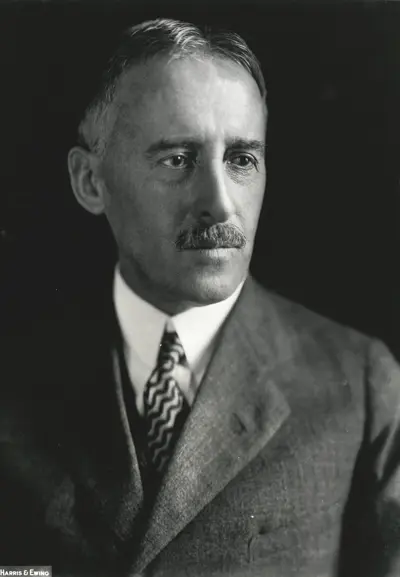
Henry Lewis Stimson was an American statesman, lawyer, and Republican Party politician. Over his long career, he emerged as a leading figure in U.S. foreign policy by serving in both Republican and Democratic administrations. He served as Secretary of War (1911–1913) under President William Howard Taft, Secretary of State (1929–1933) under President Herbert Hoover, and Secretary of War (1940–1945) under Presidents Franklin D. Roosevelt and Harry S. Truman.
