James Monroe Quotes
The American continents ... are henceforth not to be considered as subjects for future colonization by any European powers.... We should consider any attempt [by European countries] to extend their system to any portion of this hemisphere as dangerous to our peace and safety. With the existing colonies or dependencies of any European Power we have not interfered, and shall not interfere. But with the governments who have declared their independence, and maintained it ... we could not view any interposition for the purpose of oppressing them, or controlling, in any other manner, their destiny, by any European Power, in any other light than as the manifestations of an unfriendly disposition towards the United States. [The "Monroe Doctrine."]
James Monroe, 1758-1831, 5th President of the United States (Democratic Republican, VA), Message to Congress, December 2, 1823
Sourced by: Eigen's Political and Historical Quotations

The term “America” was used by him and others to refer to South and Central America—not the United States.


The Congress was reacting against the prospect of France supporting a monarchy in Mexico.

The Peninsula was the term used to describe Spain. At the time there were various wars and conquests of Spain and Portugal and by referring to the Peninsula everyone knew what was referred to independent of the latest battle or revolution.

Cuba has been in American sights for a long time.
That is exactly what happened. The Spanish raped and interbred with the native women in the Americas and it was their offspring who ended up dominating South and Central American societies.

This statement became known as "The Truman Doctrine." Truman asked for $400 million to help Greece and Turkey fight stave off armed Communist minorities destabilizing their governments.


American official foreign policy had been officially isolationist—to not get involved in the squabbles and fights of other nations. Angell however pointed out that even before WWII, America had formally been involved in 6 foreign wars and used military incursions on foreign soil on almost 100 occasions.
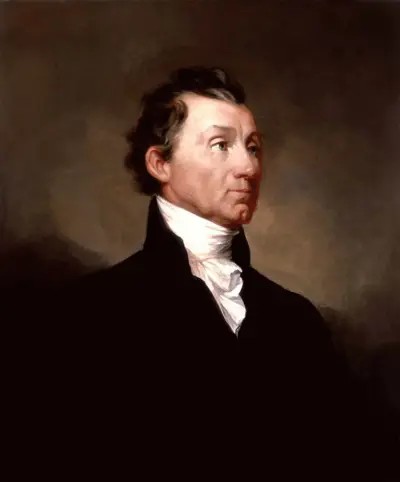
James Monroe was an American statesman, lawyer, diplomat and Founding Father who served as the fifth president of the United States from 1817 to 1825. A member of the Democratic-Republican Party, Monroe was the last president of the Virginia dynasty; his presidency coincided with the Era of Good Feelings. He is perhaps best known for issuing the Monroe Doctrine, a policy of opposing European colonialism in the Americas. He also served as the governor of Virginia, a member of the United States Senate, the U.S. ambassador to France and Britain, the seventh Secretary of State, and the eighth Secretary of War.
