Philip Agee Quotes
The aim of our [the CIA’s] programmes was to support the status quo, to support the oligarchies of Latin America. These are the power structures that date back centuries, based on ownership of the land, of the financial resources, of the export-import system, and excluding the vast majority of the population. With all of our programmes, we were supporting these traditional power structures. What first caused me to turn against these people were the corruption and the greed that they exhibited in all areas of society. My ideas and attitudes began to change, and eventually I decided to resign from the CIA.
Agree resigned from the CIA in protest to its political positions. This were sometimes independent and different from those of the President and the Secretary of State
Philip Agee, 1935-2008, CIA Field Officer, Quoted in his obituary, By Murray Horton,– August 36, 2008
Sourced by: Eigen's Political and Historical Quotations


Although Fiorello La Guardia proposed an aggressive reform program for New York City, he did not go far enough for some.
He was not referring to economic corruption but intellectual and moral corruption. Regan who appointed many excellent key officials picked a very unfortunate choice to lead the CIA. William J. Casey had many faults and weaknesses—See {637472}, {636743} and {637469}. But the worst of his damage was imposing his ideology on the agency and having the intelligence analysts shape their intellectual product to conform with a particular world, political, and religious view. See {634408}. This became acceptable and as future administrations took power their ideologies were considered by the CIA professionals and reports were edited and shaped accordingly. Reform was instituted by some of the future CIA directors but there were precedents from the Casey days for years. One particularly bad manifestation of this intellectual corruption occurred when Vice President Richard Cheney imposed a neocon world view on the agency with a pliant CIA director and the agency gave the President a totally inaccurate assessment of Iraq nuclear capability and intention which triggered the disastrous Iraq war, made all the worse when there were not only no nuclear weapons in Iraq as had been reported, but there was not even a single laboratory trying to develop nuclear weapons or even nuclear power.


The public had been roused by the meatpacking scandal and the other exposes of the leading muckraking journalists—of which Baker was one. President Roosevelt had galvanized and led the public opinion to pressure congress and major great reforms were under way that would change America forever—see New York Times editorial {86516}.


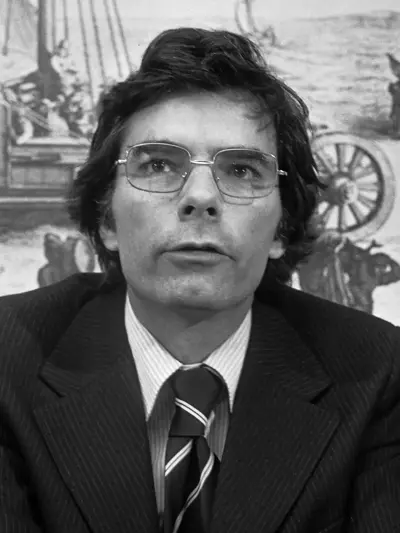
Philip Burnett Franklin Agee was a Central Intelligence Agency (CIA) case officer and writer of the 1975 book, Inside the Company: CIA Diary, detailing his experiences in the CIA. Agee joined the CIA in 1957, and over the following decade had postings in Washington, D.C., Ecuador, Uruguay and Mexico. After resigning from the Agency in 1968, he became a leading opponent of CIA practices. A co-founder of the CounterSpy and CovertAction series of periodicals, he died in Cuba in January 2008.
