Jimmy Reid Quotes
Profit is the sole criterion used by the establishment to evaluate economic activity. From the rat race to lame ducks. The vocabulary in vogue is a give-away. It's more reminiscent of a human menagerie than human society.
Reid, Jimmy. "Alienation." Rectorial Address, University of Glasgow, 28 Apr. 1972. Published in Reflections of a Clyde-built Man, Souvenir Press, 1976.


Although Fiorello La Guardia proposed an aggressive reform program for New York City, he did not go far enough for some.


Often referred to as “The Dean of Black Historians.”


Labor unions as we know them did not then exist. Calhoun and many others saw the struggle as a inherent class struggle, not unlike that particular view of Karl Marx. See {606584} for one his more extreme views on the subject.


See Howard Zinn, 1922-2010 {38477} for a later, narrower view with respect to America.


In his economic view, managers, accountants, attorneys, owners, shareholders, landlords, were all supported by the workers who have to support themselves and all the others.

This is one of the FDR quotations, which his opponents then, and many conservatives later, characterized as “class warfare.” This type of accusation has in part protected business leaders and those who control wealth from public accountability. Similar business leader resentment was levied against President Obama when he criticized the Bankers and Wall Street leaders whose behavior, in great part, was the cause of the economic meltdown and recession of 2008.


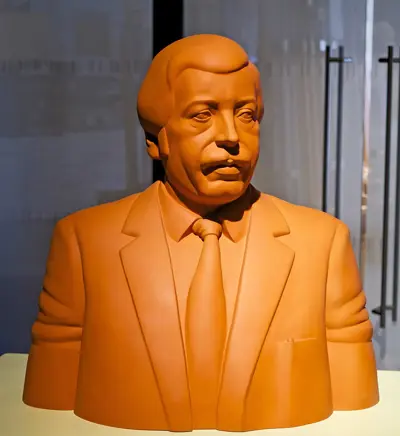
James Reid was a Scottish trade union activist, orator, politician and journalist born in Govan, Glasgow. His role as spokesman and one of the leaders in the Upper Clyde Shipbuilders work-in between June 1971 and October 1972 attracted international recognition. He later served as Rector of the University of Glasgow and subsequently became a journalist and broadcaster. Formerly a member of the Communist Party of Great Britain, Reid was later a member of the Labour Party. He moved on to supporting the Scottish Socialist Party in the late 1990s, then joined the Scottish National Party in 2005 and gave his full support to the idea of Scottish independence. He died in 2010 after a long illness.
