Charlemagne Quotes
That our judges, counts, or envoys shall not have a right to extort payment of the remitted fine, on their own behalf…
This document was a type of Magna Carta but far earlier.
Charlemagne, 742-814, French King Charles, First Christian King & Holy Roman Emperor, Capitulary Issued in the Year 802
Sourced by: Eigen's Political and Historical Quotations

This document was a type of Magna Carta but far earlier.

“Magistrate” has the meaning of leading public official of an area. Mayors are often called the Chief Magistrates of the city, for example.


This quotation is a more sophisticated statement of the Magna Carta clause {583716}. Note that English law allowed redress against all other people including religions officials and government temporal officers. And everyone was entitled to justice and access to the courts including outlaws or people who have been excommunicated. In many countries these people do not have the protection of the law. This tradition allows prisoners in jail to sue the jailers for example. And imagine a person who had been excommunicated as a heretic and yet allowed to live turning around and suing clerics who were persecuting him in an Islamic nation other than Turkey.
Sealed under duress and later repudiated by the King with Papal assistance.

This is the earliest surviving attempt of the Romans to formulate a legal code.


A few years later Mitchell himself was convicted and sent to prison.
Before there was a separation of powers, the term “magistrate” referred to public officials who had the executive and judicial powers as well as some legislative authority. The term “Chief Magistrate” applied to the President of the United States is somewhat of a throwback to this older term and concept. In 17th century Ireland, magistrates were the chief authorities of each subarea, and corruption was rampant. To this day, the invitation to corruption and lack of long term interest in governance is given to support long terms of office and to oppose term limits.


This is a common rejoinder of third world country leaders to accusations of Western democracies about corruption. And doubtless it is true. However temptation has never been a good defense of improper behavior.


Scalia had been a close friend of the Vice President. He had recently been taken on the Vice President’s plane and they went duck hunting.


At the turn of the century, there was a moral norm in much of the country that buying and stealing votes in elections were not moral transgressions and was acceptable in the heat of political contests.

Abramoff had bribed over 100 Congressional offices by a combination of campaign donations, paid golf junkets all over the world, free elegant meals at his own fancy Washington Restaurant, free tickets for the Congressmen, their staffs and their major constituents, to Concerts and sporting events including his own Skyboxes, and promises of future employment at very high salaries. Ironically, we was convicted of cheating some of his lobbying clients and did a jail term, but his “bribery” was technically usually legal. In addition to Abramoff, only one Congressman was charged and convicted of corruption, when many if not most had engaged in these corrupt practices. Congress makes the rules with loopholes so that what is bribery and corruption in any other setting is often not against the law if Congress is involved.


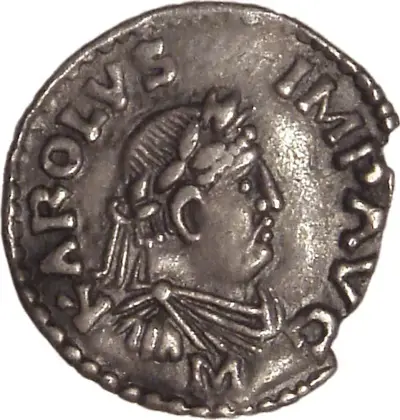
Charlemagne (English: /ˈʃɑːrləmeɪn, ˌʃɑːrləˈmeɪn/; French: [ʃaʁləmaɲ]) or Charles the Great; from the Latin Carolus Magnus, numbered Charles I, was the King of the Franks from 768, the King of the Lombards from 774, and the Emperor of the Romans from 800. During the Early Middle Ages, he united the majority of western and central Europe. He was the first recognised emperor to rule from western Europe since the fall of the Western Roman Empire around three centuries earlier. The expanded Frankish state that Charlemagne founded is called the Carolingian Empire. He was later canonised by Antipope Paschal III.
