Book of Isaiah Quotes
Woe unto them ... who acquit the guilty for a bribe, and deprive the innocent of his right!
Old Testament, Isaiah 5:22-23
Sourced by: Eigen's Political and Historical Quotations

Adopted by the original Edinburgh Review Magazine as its motto.


Mistakes in the criminal justice system have been with us from the birth of the nation.

There were a number of anarchist organizations across the country and in New York that advocated anarchism. As Moss testified, one of the reasons that the anarchists found sympathizers and followers was the incompetence, corruption, and injustice of the courts. After the Page Commission report New York Courts began a reform and triggered similar court reform efforts throughout the country. Even today we have problems with overzealous or corrupt police or prosecutors who falsify or hide evidence, but the frequency is very small compared with what it was in the early 1900s.

This is one of the proverbs of King Solomon of the Jews, son of King David.

He was referring to exonerations for capital crimes like murder. He had written a book about a case where a man who was later proved innocent was reprieved only 5 days before his execution.


The Senator was referring to the large number of people who had been exonerated by DNA evidence while on Death Row.


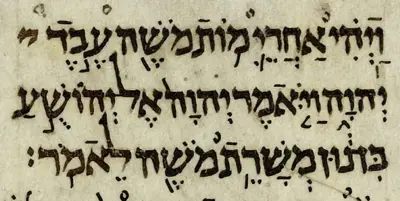
The Book of Isaiah (Hebrew: ספר ישעיהו, [ˈsɛ.fɛr jə.ʃaʕ.ˈjaː.hu]) is the first of the Latter Prophets in the Hebrew Bible and the first of the Major Prophets in the Christian Old Testament. It is identified by a superscription as the words of the 8th-century BCE prophet Isaiah ben Amoz, but there is extensive evidence that much of it was composed during the Babylonian captivity and later. Johann Christoph Döderlein suggested in 1775 that the book contained the works of two prophets separated by more than a century, and Bernhard Duhm originated the view, held as a consensus through most of the 20th century, that the book comprises three separate collections of oracles: Proto-Isaiah (chapters 1–39), containing the words of the 8th-century prophet Isaiah; Deutero-Isaiah (chapters 40–55), the work of an anonymous 6th-century BCE author writing during the Exile; and Trito-Isaiah (chapters 56–66), composed after the return from Exile. Isaiah 1–33 promises judgment and restoration for Judah, Jerusalem and the nations, and chapters 34–66 presume that judgment has been pronounced and restoration follows soon. While virtually no scholars today attribute the entire book, or even most of it, to one person, the book's essential unity has become a focus in more recent research.
