Illinois Quotes
That if any person or persons shall bring into this State, any negro or mulatto slave, whether said slave is set free or not, he or they shall be liable to an indictment, and upon conviction thereof, be fined for every such negro or mulatto, as sum not less than one hundred dollars, nor more than five hundred dollars, and imprisoned in the county jail not more than one year …. If any negro or mulatto, bond or free, shall come into this State, and remain ten days, with the evident intention of residing in the same, every such negro or mulatto shall be deemed guilty of a high misdemeanor, and for the first offence shall be fined the sum of fifty dollars
This was the Illinois solution to the problem caused by the Fugitive Slave Act. Pennsylvania and other States had experienced pitched battles over slave owners or their agents trying to forcibly remove blacks. Illinois could claim to the slave catchers that there were no runaway slaves in the State as a result of their law. As anti Black as the second part seems to indicate, there was a catch. The Blacks could enter Illinois and stay for 10 days—enough time to rest and obtain nourishment and then be on their way to Canada. It turned out that the law offended everyone as often happens when compromise is attempted on fundamental principles like slavery and racism.
Illinois, Law, 1853
Sourced by: Eigen's Political and Historical Quotations


Incredibly enough, after the Civil War and emancipation, most Virginia leaders opposed any form of rights for Blacks with one of the major reasons being that they were ignorant and uneducated. It was actually a crime to teach even a free Black to read.

Brigham Young, the Mormon Leader and Territorial Governor, was strongly opposed to Interracial sex. See {629150}. An earlier clause provided for loss of the rights to a slave if the master had sexual relations with the slave, something that no Southern State had ever done.


The first sentence is inscribed on the Jefferson Memorial in Washington DC. The last two sentences are rarely quoted.

Newsletter of the United Sons of Confederate Veterans

Captain W.W. Polk, commanding the Coast Guard revenue cutter Florida, wrote Treasury Secretary asking permission to employ a young Negro on board. Existing regulations prohibited such. The Negro in question was a free Black born in New York who was an “expert sailor for his age and competent to the duty of a boy of the first class.” Polk had hired the boy as a servant after he had worked at sea for another Captain. Good seamen were hard to come by, decision was extremely contentious. Ingham “compromised” by limiting the allowable role of Negroes at sea—a practice that lasted till the Second World War.

He was lecturing to an audience of 1500 Blacks. Darrow was castigated for telling Negroes that they did not have an inherently inferior capacity from whites, This was feared would make them too demanding and insist on unrealistic equality.

The editor at the time was Dr. William H. Boyle but no one is sure whether he, the owner, or someone else, wrote the editorial. The quotation illustrated a fascinating twist of logic that was very commonly held at the time. “If God created men of different colors, he must have meant them to be separate.” It is fascinating that virtually no one at the time made a similar argument about hair or eye color, intellect or other differential traits of people. Although this logical fallacy waned in the latter part of the 20th century, there are some who still hold to it.


There was a fear of free Blacks gambling which did not extend to whites as there was much gambling at the time.

For a slave to run away, capital punishment was not only authorized, but ANY white could execute the runaway, without even a trial. Needless to say that many slaves who were not runaways were killed.

The letter was written in the supposed style of a Black after Emancipation and includes most of the ugly false stereotypes of the worst of the racists of the present and the slaveowners of past times. Williams stated that he was not a racist and was trying to make a point about freedom required risk and responsibility. However, the effort was interpreted by many people, Black and white, to be insulting and a put down of African Americans. At the same time, although most of the Tea Party members were not racists, most of the racists in America were supporters of the Tea Party. Those people interpreted the quotation as "telling it like it is" about Blacks who do not want the responsiblities and risks of freedom and are not yet developed sufficiently to be equal citizens in a democracy.

Religion has been on both sides of the racism issue. In general, slavery the world over and in the American South needed the support of mainstream religions. At the same time, religion has been one of the major forces for abolition. The two mainstream Protestant religions of the South, the Baptists and the Methodists split from their Northern brethren in the 19th century over the slavery issue, and they have never united.
This quotation illustrates the Catch 22 dilemma that faces a minority. Black slaves were not allowed to marry and have formal families. After the Civil War racists warned against Blacks who had no respect for marriage monogamy end civil family life. See {619099} But when the slaves were freed and the ex slaves attempted to formalize and solemnize their marriages, they were castigated for that – acting like white people.


This quotation is significant. Ibn Khalodun was one of the great intellectual Arab scholars, yet he looked upon Blacks as subhuman and fit for slavery. While Islam preaches the equality of all people, the Arabs had and many still have a raciest view of Blacks. The Arabs were the leaders among the slave traders and many an American Captain of a slave trader bought his slaves from Arab slave traders. Saudi Arabia was the last nation to outlaw legal slavery (1963) and it is still illegally practiced in Saudi Arabia and other Arab states of the Middle East. The attitude can be seen in much of the Arab Middle East even today. For examples, the Muslim Arabs in Northern Sudan refer to the Black non-Islamic Southerners using a derogatory term that means slave.


The early laws regarding slaves were more protective in earlier Colonial America than they were after independence. In Colonial America all local laws and the enforcement thereof were subject to the government and king of England. When the Constitution was passed with the understanding that Slavery issue was not to be even discussed in Congress, there was NO OUTSIDE ENTITY to check any laws or lack of laws or the enforcement thereof. The Southern States were a law unto themselves on the slavery issue and the system became even more brutal and cruel with no moderating force. When such a force seemed close with the Republican 1860 victory, the South seceded. Then war was the moderating force.
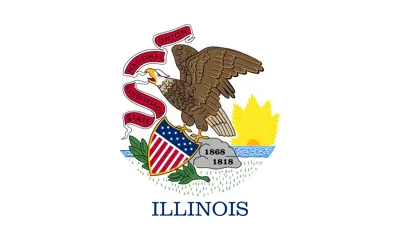
Illinois is a state in the Midwestern region of the United States. It has the fifth largest gross domestic product (GDP), the sixth largest population, and the 25th largest land area of all U.S. states. Illinois has been noted as a microcosm of the entire United States. With Chicago in northeastern Illinois, small industrial cities and immense agricultural productivity in the north and center of the state, and natural resources such as coal, timber, and petroleum in the south, Illinois has a diverse economic base, and is a major transportation hub. The Port of Chicago connects the state to international ports via two main routes: from the Great Lakes, via the Saint Lawrence Seaway, to the Atlantic Ocean and from the Great Lakes to the Mississippi River, via the Illinois River, through the Illinois Waterway. The Mississippi River, the Ohio River, and the Wabash River form parts of the boundaries of Illinois.
