Edsger Dijkstra Quotes
Testing can be used to show the presence of bugs, but never to show their absence!
This principle is very important in all kinds of human activity. We design and test or pilot test products and programs of all kinds—governmental and not. The testing may uncover a flaw or problem, but the failure to find flaws or problems does NOT mean that they are not inherent in the program—they may well be there and have not been uncovered by the tests. Often when this occurs, we refer to them as “unintended consequences.”
Edsger Dijkstra, 1930-2002, Dutch computer scientist, Notes On Structured Programming, 1972
Sourced by: Eigen's Political and Historical Quotations


This was one of the critical quotes from the handling of the Great Depression. The President had a series of radio talks to the people in which he addressed them directly and explained things as he then understood them. In this particular quotation he was trying to manage the public’s expectation and told them quite candidly that he and his administration would make some mistakes—some Presidents like Hoover, his predecessor, rarely ever admitted error.


When a people is facing adversity with fear Spinoza was one of the most feared intellectuals in human history—feared, that is, by the established power structures. Spinoza’s ideas were considered so radical and dangerous that he was the only man in history who was excommunicated by the Catholics, the Jews and the Muslims.
This quotation shows FDR doing something that politicians rarely do. The country was in the midst of the Great Depression and he was running for the Presidency against Herbert Hoover who as President would do little to help the destitute part of the population or improve the economy. Roosevelt did not lay out specific programs which he claimed would fix the problem. He himself really didn’t know for certain what would and what would not. However he promised bold experimentation—trying new things. When he was elected, he was able to fail with one program and just shift to another until enough were successful. But the great contrast was to Hoover who would do little.
Two of the 20th centuries greatest political leaders were Mao Tse-Tung and Franklin Delano Roosevelt. In most respects, these two were polar opposites. However, they had one characteristic in common. They were both willing to try things they were not certain of. If they succeeded, make it a part of the national program. If it failed, try something else. See Mao {642795}.


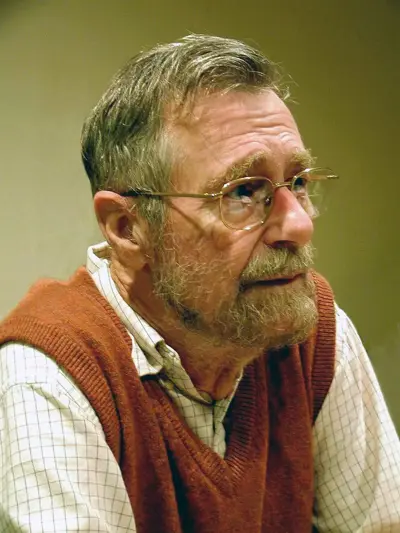
Edsger Wybe Dijkstra was a Dutch computer scientist, programmer, software engineer, systems scientist, science essayist, and pioneer in computing science. A theoretical physicist by training, he worked as a programmer at the Mathematisch Centrum (Amsterdam) from 1952 to 1962. A university professor for much of his life, Dijkstra held the Schlumberger Centennial Chair in Computer Sciences at the University of Texas at Austin from 1984 until his retirement in 1999. He was a professor of mathematics at the Eindhoven University of Technology (1962–1984) and a research fellow at the Burroughs Corporation (1973–1984). In 1972, he became the first non-American, non-British, and continental European winner of the Turing Award.
