Baruch Spinoza Quotes
No plan is then too futile, too absurd, or too fatuous for their adoption; the most frivolous causes will raise them to hope, or plunge them into despair — if anything happens during their fright which reminds them of some past good or ill, they think it portends a happy or unhappy issue, and therefore (though it may have proved abortive a hundred times before) style it a lucky or unlucky omen. No plan is then too futile, too absurd, or too fatuous for their adoption; the most frivolous causes will raise them to hope, or plunge them into despair — if anything happens during their fright which reminds them of some past good or ill, they think it portends a happy or unhappy issue, and therefore (though it may have proved abortive a hundred times before) style it a lucky or unlucky omen.
When a people is facing adversity with fear Spinoza was one of the most feared intellectuals in human history—feared, that is, by the established power structures. Spinoza’s ideas were considered so radical and dangerous that he was the only man in history who was excommunicated by the Catholics, the Jews and the Muslims.
Benedict Spinoza, 1632-1677, Dutch Philosopher, Theological-Political Treatise, 1670
Sourced by: Eigen's Political and Historical Quotations


This principle is very important in all kinds of human activity. We design and test or pilot test products and programs of all kinds—governmental and not. The testing may uncover a flaw or problem, but the failure to find flaws or problems does NOT mean that they are not inherent in the program—they may well be there and have not been uncovered by the tests. Often when this occurs, we refer to them as “unintended consequences.”


He was discussing his unprecedented steps that as Federal Reserve Chairman he took to cope with the Great Recession after the Meltdown of 2008. He had, as a graduate doctoral student, studied the economic history of the Great Depression of 1929 and the government attempts to ameliorate some of the effects. He was one of the few people in government who had this historical perspective.


This was the worst storm that hit the East Coast that anyone could remember. Despite the Governor’s shock, he and the other East Coast Governors together with the Federal and local governments performed magnificently keeping the fatalities very low considering the ferocity of the storm and the tens of millions of people affected.

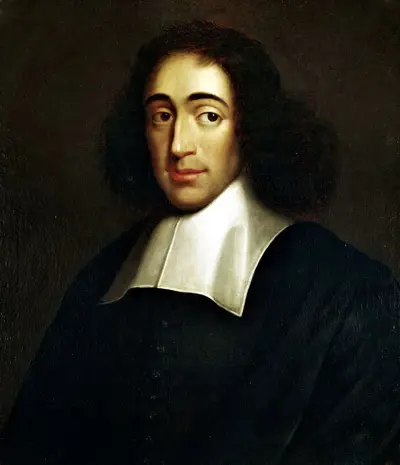
Baruch (de) Spinoza was a Dutch philosopher of Portuguese Sephardi origin. One of the early thinkers of the Enlightenment and modern biblical criticism, including modern conceptions of the self and the universe, he came to be considered one of the great rationalists of 17th-century philosophy. Inspired by the groundbreaking ideas of René Descartes, Spinoza became a leading philosophical figure of the Dutch Golden Age. Spinoza's given name, which means "Blessed", varies among different languages. In the Netherlands he used the Portuguese name Bento. In his Latin and Dutch works, he used Latin: Benedictus de Spinoza.
