Marshall McLuhan Quotes
Television brought the brutality of war into the comfort of the living room. Vietnam was lost in the living rooms of America—not on the battlefields of Vietnam.
Marshall McLuhan, 1911-1980, Canadian Social & Communications Philosopher, Montreal Gazette, May 16, 1975
Sourced by: Eigen's Political and Historical Quotations


An economic bubble occurs when the investing public with little logic and facts to support it actions exhibits great enthusiasm and overvalues some kind of asset with the logic that the price is going up and someone later will pay more than I just did—sometimes called the “greater fool theory”. Historically Fama claims that there were no bubbles until there were media to whip up the irrational enthusiasm necessary for a bubble to take place. Capitalist history is full of bubbles ranging from real estate, to tulips; from silver to dot com shares. The damage is always great to the people at the end who are stuck with the object of the bubble which few people want any more. In the period before the bubble, lots of people make money contributing to the demand for the object of the bubble.

Cronkite was the CBS News Anchor who was the “most trusted man in America”. On the evening news, Cronkite had for the first time stated that the Vietnam War was unwinnable.


Given the early year, with television available in only New York and large cities and hardly any viewers, it is fascinating that White could see the importance of the new medium. Masters of old media tend to underestimate the power and advantage of new media.


Ronald Reagan’s media expert, Michael Deaver, developed a new approach to Presidential appearances. He realized that if the President made a 5 or 10 minute speech at an event, the Evening News would choose one or two 10-15 second excerpts, and that was what the vast majority of the country would see. Therefore, he reasoned, the words spoken meant relatively little. It was the image what would last in people’s memory. Therefore, he worked hard to concentrate on getting the right background for the President’s appearance. The Statue of Liberty, a naval ship, a factory at work. The set of images that people would have of the President in these different appearances would define the President in the minds of most people. Deaver would be more concerned that the TV camera’s showed the background scene he had planned (rather than a strange angle or just a close-up of the President’s face) than he would be about which words—sound bytes—the TV station would select. Hence Baker’s observation that words were less important than the TV images.
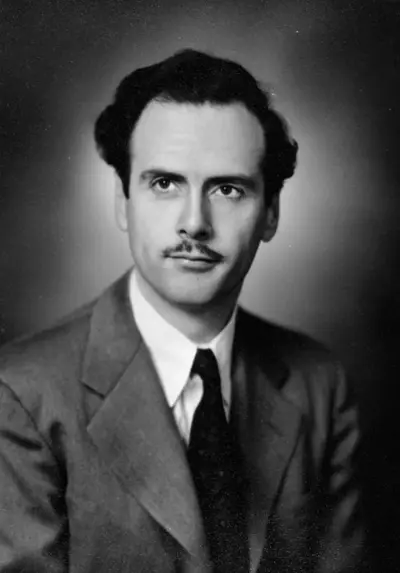
Herbert Marshall McLuhan CC was a Canadian philosopher, whose work is among the cornerstones of the study of media theory. Born in Edmonton, Alberta, and raised in Winnipeg, Manitoba, McLuhan studied at the University of Manitoba and the University of Cambridge. He began his teaching career as a professor of English at several universities in the US and Canada before moving to the University of Toronto in 1946, where he remained for the rest of his life.
