Arthur M. Schlesinger Jr. Quotes
Television has spread the habit of instant reaction and has stimulated the hope of instant results.
Arthur M. Schlesinger, Jr., Historian & Presidential Advisor (Democrat), Quoted in Nancy Snow, nancysnow.com/, January 21, 2007
Sourced by: Eigen's Political and Historical Quotations


Ronald Reagan’s media expert, Michael Deaver, developed a new approach to Presidential appearances. He realized that if the President made a 5 or 10 minute speech at an event, the Evening News would choose one or two 10-15 second excerpts, and that was what the vast majority of the country would see. Therefore, he reasoned, the words spoken meant relatively little. It was the image what would last in people’s memory. Therefore, he worked hard to concentrate on getting the right background for the President’s appearance. The Statue of Liberty, a naval ship, a factory at work. The set of images that people would have of the President in these different appearances would define the President in the minds of most people. Deaver would be more concerned that the TV camera’s showed the background scene he had planned (rather than a strange angle or just a close-up of the President’s face) than he would be about which words—sound bytes—the TV station would select. Hence Baker’s observation that words were less important than the TV images.

See Robert Rubin for a later variant: {614135}

This was the veteran newspaper editor’s last column before retirement and he chose to write it about the role of the press in the Japanese imperialist and militaristic nation in the period before and during WWII. He was then a young journalist. While most Japanese see that period as disastrous where the nation lost its way, the ultra conservatives blame the insufficient attention and support of the military and in retrospect do not see that the Japanese have anything to apologize for. Most of Asia disagrees profoundly.


See Dee Dee Myers’ Response {618820}


TR worked very hard for his press coverage. He literally met with the press every day—often several times. Daily, his barber had to cut and shave with the President talking to the reporters and answering questions. The only time he stopped talking was when the barber was shaving his chin or upper lip.

The Democrat campaign operators, led by Robert Woolley, for the first time in an American Presidential campaign, used all the new techniques of public relations and advertising that had been developed. Many observers like the New Republic editors saw this in a negative light for American democracy. They wanted the old method where people met the candidates and had discussions with candidates or heard from others who had. It was in retrospect an editorial of nostalgia, as the country was growing so much that voter “acquaintance” with Presidential candidates was becoming more and more difficult.


This was her response to Sander Vanocur {618913}


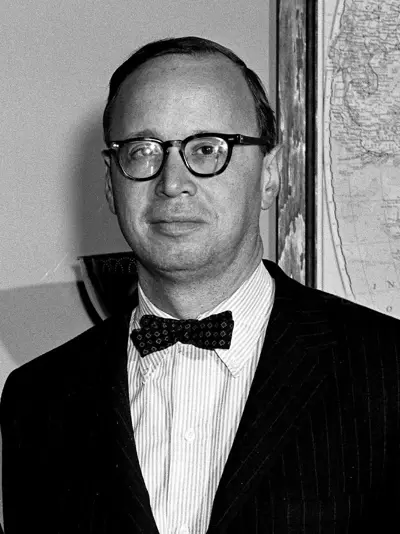
Arthur Meier Schlesinger Jr. was an American historian, social critic, and public intellectual. The son of the influential historian Arthur M. Schlesinger Sr. and a specialist in American history, much of Schlesinger's work explored the history of 20th-century American liberalism. In particular, his work focused on leaders such as Harry S. Truman, Franklin D. Roosevelt, John F. Kennedy, and Robert F. Kennedy. In the 1952 and 1956 presidential campaigns, he was a primary speechwriter and adviser to the Democratic presidential nominee, Adlai Stevenson II. Schlesinger served as special assistant and "court historian" to President Kennedy from 1961 to 1963. He wrote a detailed account of the Kennedy administration, from the 1960 presidential campaign to the president's state funeral, titled A Thousand Days: John F. Kennedy in the White House, which won the 1966 Pulitzer Prize for Biography or Autobiography.
