David M. Oshinsky Quotes
So much of the bitterness that the term 'McCarthyism' evokes refers to the probe begun in New Jersey in the summer of 1953 - both in the laboratories of Fort Monmouth and in the surrounding communities of Red Bank and Belmar, where some of the best scientists and engineers in America worked.
Oshinsky, David M. A Conspiracy So Immense: The World of Joe McCarthy. Free Press, 1983.


A theater arts program that operated nationally under the WPA.
The security system at Los Alamos while the atomic bomb was being developed was absurd. Scientists from all over the country had to be hired quickly. Many of them had friends and relatives who had various left-wing associations; some came from Germany or had German connections. A number of the key scientists were German refugees from Hitler's persecution. The military security people, using their traditional standards, would not clear people if they had any left wing friends or associates or they came from Europe and there were no records to prove that they were not fascists or communists. Most of the refugees got out with their lives and had no records, but they were among the best scientists in the world. J Robert Oppenheimer, the scientific director, and General Leslie Groves needed the scientists as the work had to be done. Groves approved important personnel for hire pending security clearance which never came and which Groves knew would never come. Nonetheless the people were working by the time intelligence officers outside the project realized what was going on. People without clearance had some of the most sensitive jobs at Los Alamos. Not a single one of those people turned out to be a security risk or a spy. There was a spy however who had come the English scientific delegation, but the security people had cleared him. Barnett however, as Oppenheimer’s personal assistant had access to almost everything having to do with the development of the bomb. She never did get cleared for her job.


Although the U. S. denied propaganda and dirty tricks efforts interfering in the internal affairs of South American Countries, this memo proves that there were some instances of just that.


Reacting to the disarray of the federal government as a result of the activities of Senator Joseph R. McCarthy:
McCarthy was in many ways like Donald Trump. One was taht the press loved to cover his statements and accusations that were so absurd and sensational that they sold a lot of nespapers, magazines and obtained many TV / Radio viewers/listeners. As a result he got much more media coverage that he warranted in teh view of many, President Dwight Eisenhower, who generally would not even mention McCarthy's name was percieved by Adlai Stephenson and many others as weak and fearful of McCarthy, Tannenhous and some other historians believed that fear had nothing to do with it, but that Eisenhower not only chose this as a deliberate strategy, but one that was quite effective.


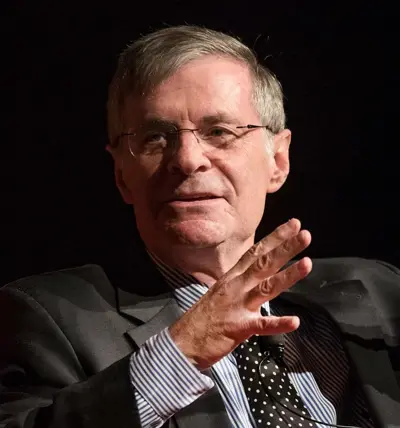
David M. Oshinsky (born 1944) is an American historian. He is the director of the Division of Medical Humanities at NYU School of Medicine and a professor in the Department of History at New York University.
