Robert Vaughn Quotes
I did my Doctorate on the House Un-American Activities Committee's effect on the American theater.
Vaughn, Robert. A Fortunate Life. Thomas Dunne Books, 2008.


A theater arts program that operated nationally under the WPA.

The Red Scare had affected much of the country. The House Un-American Activities Committee had frightened much of the country claiming that the Communists had infiltrated the government. But when facts and proof were demanded, all they came up with some workers in the Hollywood film industry who had gone to communist meetings and some who had joined the party before the War when The Great Depression was still plaguing the country. The Hollywood and TV executives caved in to the political demagogues and fired and blacklisted not only the communists but those who refused to testify. The actors and musicians could not work for several years until the country came to its senses, but the screenwriters wrote under false names. At least one Academy award was won that way.


Although the U. S. denied propaganda and dirty tricks efforts interfering in the internal affairs of South American Countries, this memo proves that there were some instances of just that.


Reacting to the disarray of the federal government as a result of the activities of Senator Joseph R. McCarthy:

Even the President was not spared during the McCarthy era. The red scare was so pervasive, that a lunatic fringe ultra right wing organization could call the President a “communist dupe” and be taken seriously be much of the media who were themselves intimidated and might be accused of being communists at any moment. It was a very low point in America’s history.

Seeger had been a member of the Communist Party and had left it in 1950. See {635866}. He was later called before the House UnAmerican Activities Committee and asked to reveal the names of others who had been members. In those days of the red scare and McCarthyism, most people asked to name names and not wanting to do so “took the 5th Amendment” and could not be legally forced to reveal the names. Seeger as a matter of principle refused to plead the 5th Amendment because he was not afraid of incriminating himself and had done nothing criminal anyway. So he, a war veteran of WWII, instead refused to answer {635867} citing his First Amendment right of freedom of association. There was no legal precedent for this, and he was indicted and convicted for Contempt of Congress. However, his conviction was overturned as unconstitutional by the U. S. Federal Appeals court. Seeger had prevailed legally. But in retaliation Seeger was blacklisted and none of the radio of TV networks or Hollywood Studios would allow him (and other blacklisted artists) to appear. Today most Americans view what McCarthy, The Congressional Committee, the networks, and Hollywood studios had done as contemptible.

The Red Scare had already reached most conservatives and Truman and most others had not yet been affected by the fear of Communism that so many people had through the 1970s.
McCarthy was in many ways like Donald Trump. One was taht the press loved to cover his statements and accusations that were so absurd and sensational that they sold a lot of nespapers, magazines and obtained many TV / Radio viewers/listeners. As a result he got much more media coverage that he warranted in teh view of many, President Dwight Eisenhower, who generally would not even mention McCarthy's name was percieved by Adlai Stephenson and many others as weak and fearful of McCarthy, Tannenhous and some other historians believed that fear had nothing to do with it, but that Eisenhower not only chose this as a deliberate strategy, but one that was quite effective.


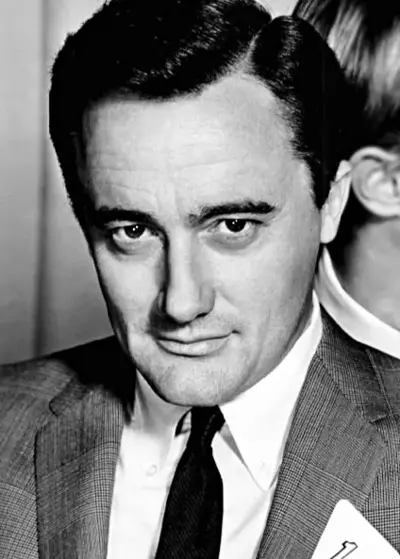
Robert Francis Vaughn was an American actor noted for his stage, film and television work. His television roles include suave spy Napoleon Solo in the 1960s series The Man from U.N.C.L.E.; wealthy detective Harry Rule in the 1970s series The Protectors; Morgan Wendell in the 1978–1979 mini series Centennial; formidable General Hunt Stockwell in the fifth season of the 1980s series The A-Team; and grifter and card sharp Albert Stroller in the British television drama series Hustle (2004–2012), for all but one of its 48 episodes. He also appeared in the British soap opera Coronation Street as Milton Fanshaw, a love interest for Sylvia Goodwin between January and February 2012.
