Whittaker Chambers Quotes
My children, as long as you live, the shadow of the Hiss Case will brush you. In every pair of eyes that rests on you, you will see pass, like a cloud passing behind a woods in winter, the memory of your father - dissembled in friendly eyes, lurking in unfriendly eyes.
Chambers, Whittaker. Witness. Random House, 1952, p. 3.


The security system at Los Alamos while the atomic bomb was being developed was absurd. Scientists from all over the country had to be hired quickly. Many of them had friends and relatives who had various left-wing associations; some came from Germany or had German connections. A number of the key scientists were German refugees from Hitler's persecution. The military security people, using their traditional standards, would not clear people if they had any left wing friends or associates or they came from Europe and there were no records to prove that they were not fascists or communists. Most of the refugees got out with their lives and had no records, but they were among the best scientists in the world. J Robert Oppenheimer, the scientific director, and General Leslie Groves needed the scientists as the work had to be done. Groves approved important personnel for hire pending security clearance which never came and which Groves knew would never come. Nonetheless the people were working by the time intelligence officers outside the project realized what was going on. People without clearance had some of the most sensitive jobs at Los Alamos. Not a single one of those people turned out to be a security risk or a spy. There was a spy however who had come the English scientific delegation, but the security people had cleared him. Barnett however, as Oppenheimer’s personal assistant had access to almost everything having to do with the development of the bomb. She never did get cleared for her job.

H. S. Tsien was one of the founders of the Jet Propulsion Laboratory and one of the major technical leaders of the American Space and Missile Programs. In the Red Scare of the 1950s some nativist conservative members of Congress and others managed to get his security clearance removed on the grounds that he had Communist Sympathies. Like many other American Citizens, he disapproved of the Chinese dictator Chiang Kai-shek even though Chiang was the anti-Communist bulwark in China. Since his work was space and missiles, he had little professional to do and when Chiang Kai-shek was defeated in China and pushed to Taiwan, H. S. Tsien ended up going to China and starting their rocketry program. (He is known as the “Father of Chinese Rocketry”). He is the only scientist who was an early leader in the space programs of two different nations. Kimball, whose naval missiles were all in part developed by H. S. Tsien’s work, was furious, but at the time with McCarthyism riding high, his criticism was met by accusations that he was a Communist sympathizer.


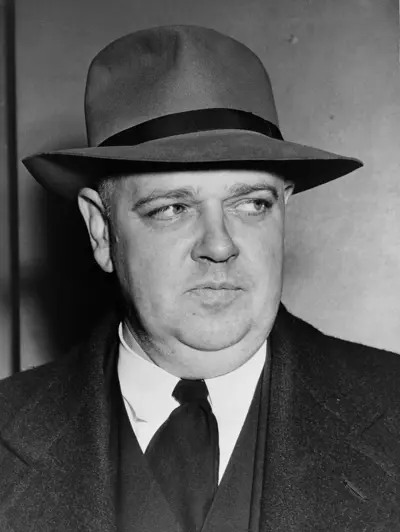
Whittaker Chambers was an American writer-editor, who, after early years as a Communist Party member (1925) and Soviet spy (1932–1938), defected from the Soviet underground (1938), worked for Time magazine (1939–1948), and then testified about the Ware group in what became the Hiss case for perjury (1949–1950), often referred to as the trial of the century, all described in his 1952 memoir Witness. Afterwards, he worked as a senior editor at National Review (1957–1959). US President Ronald Reagan awarded him the Presidential Medal of Freedom posthumously in 1984.
