Hugo Black Quotes
In the atmosphere existing in this country today, the charge that someone is a Communist is so common that hardly anyone active in public life escapes it.
Hugo Black, 1886-1971, U. S. Senator (Democrat, AL), U. S. Supreme Court Justice, Wilkinson v. United States, 1960
Sourced by: Eigen's Political and Historical Quotations


In addition to the men who feared communism so much that they ignored the then greater menace of Fascism, there was also a small but influential pro Fascist influence in England which included the King who was forced to abdicate as The Duke of Windsor.


After this, no other member of the Executive branch went before McCarthy again


Seeger’s admission was typical of tens of thousands of Americans who had become disillusioned with the fairness, equity, and effectiveness of capitalism during the depression. They were easy prey for Communist propaganda which pointed out all the problems in American society from legal racial discrimination to lack of a social safety net while at the same time lying about the Russian achievements and hiding the horrible abuses of human rights—especially the political murders of millions of people. Then the truth about Russia emerged, Seeger and so many others abandoned the Communist Party as at the same time America was improving its society and beginning to try and deal with the great problem that had plagued America from its inception—racism and slavery.


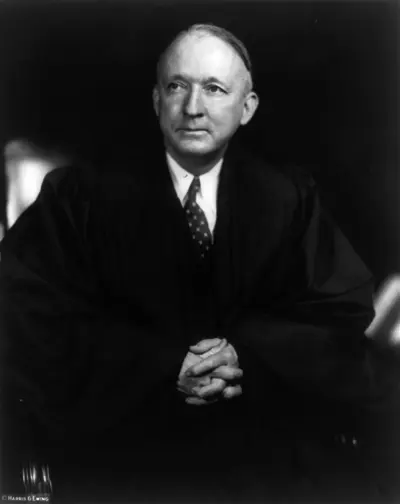
Hugo Lafayette Black was an American lawyer, politician, and jurist who served as a U.S. Senator from 1927 to 1937 and as an Associate Justice of the Supreme Court of the United States from 1937 to 1971. A member of the Democratic Party and a devoted New Dealer, Black endorsed Franklin D. Roosevelt in both the 1932 and 1936 presidential elections. Having gained a reputation in the Senate as a reformer, Black was nominated to the Supreme Court by President Roosevelt and confirmed by the Senate by a vote of 63 to 16 (six Democratic Senators and 10 Republican Senators voted against him). He was the first of nine Roosevelt appointees to the Court, and he outlasted all except for William O. Douglas.
