Hans Luther Quotes
So far, the United States knows nothing of the difficulties of over-population; and historic realities of a nature to hamper the free play of economic forces exist only in a very limited degree. Quite the reverse is true in Europe.
At the time most people did not realize that the ability of a nation or land area to support a population was dependent more on agricultural and industrial productivity than on population size. In the most affluent and developed countries, land outside of the cities is quite affordable and available, whereas in poor, underdeveloped nations, land distribution and reform is still a factor. The majority of citizens of many developed, affluent nations do not own any land.
Hans Luther, 1879–1962, German Chancellor, President of the Reichsbank, “The Security Problem”, Foreign Affairs, July 1925
Sourced by: Eigen's Political and Historical Quotations

In Burundi, family land is divided among the male children of a family. The average Burundian woman has 6.3 children, nearly triple the international fertility rate. With this fertility rate, the plots of land for each person inevitably get smaller and smaller over time. At 10,745 square miles, Burundi is slightly smaller than the U.S. state of Maryland, but it holds nearly twice as many people: about 10 million. The small plots of land are inefficient to farm and provide subsistence. So the nation was in a crises as there was little industrialization and land was essential for existence for most Burundians. See {35808} and {35809}.


This was the first issue of the publication. Population shortages vexed governments as much as population surpluses.
This was written just before Japan annexed Korea. See {613106}. It is true that Australia with vast land areas at the time was very racist and would only admit whites. America allowed some Asian immigration but limited it severely. After Japan’s defeat in WWII they solved their problem very easily. They practiced birth control and in the early 21st century Japan had a negative population growth. After World War II, there was a huge international emphasis on birth control and family planning as WWII in Asia was in part the result of overpopulation in Japan.
See {621891} for a similar view.
The Clinton Administration decided not to issue the directive. To do so would have embroiled the administration in a huge abortion debate as the NSC has previously observed that no nation has ever reduced its population growth without using abortion as one of the techniques. India, for example, utilized both abortion and sterilization—both offensive to segments of American public opinion.


As an example, if a woman is of childbearing age and does not pick up her regular subscription for birth control pills, the government requires that a phone call be made to the woman to “remind” her.

1st Baron Macaulay. He was right, and since then American institutions have been tested repeatedly regarding unemployment and recessions and depressions.

His data was from the last three decades of the 20th century. The larger a country’s population gets, the more economic growth it takes to improve or even maintain the standard of living. If this and land and other resources are in short supply relative to the population, there is more dissatisfaction and the probability of civil conflict increases. See {621892} for a similar view.

The French were at the time considered the major barrier to growth and development of the colonies.


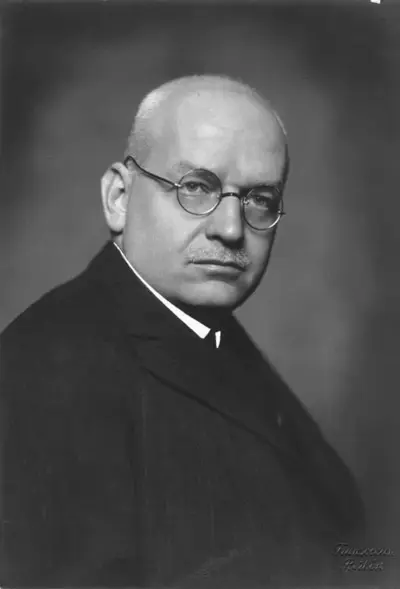
Hans Luther (listen (help·info)) was a German politician and Chancellor of Germany for 482 days in 1925 to 1926. As Minister of Finance he helped stabilize the Mark during the hyperinflation of 1923. From 1930 to 1933, Luther was head of the Reichsbank and from 1933 to 1937 he served as German Ambassador to the United States.
