Emily Greene Balch Quotes
Another cause of change, one less noticeable but fundamental, is the modern growth of population closely connected with scientific and medical discoveries. It is interesting that the United Nations has set up a special Commission to study this question.
Balch, Emily Greene. "Toward Human Unity or Beyond Nationalism." Nobel Lectures, Peace 1926-1950, edited by Frederick W. Haberman, Elsevier Publishing Company, 1972, pp. 335-346.


His data was from the last three decades of the 20th century. The larger a country’s population gets, the more economic growth it takes to improve or even maintain the standard of living. If this and land and other resources are in short supply relative to the population, there is more dissatisfaction and the probability of civil conflict increases. See {621892} for a similar view.
See {621891} for a similar view.

At the time most people did not realize that the ability of a nation or land area to support a population was dependent more on agricultural and industrial productivity than on population size. In the most affluent and developed countries, land outside of the cities is quite affordable and available, whereas in poor, underdeveloped nations, land distribution and reform is still a factor. The majority of citizens of many developed, affluent nations do not own any land.


In Burundi, family land is divided among the male children of a family. The average Burundian woman has 6.3 children, nearly triple the international fertility rate. With this fertility rate, the plots of land for each person inevitably get smaller and smaller over time. At 10,745 square miles, Burundi is slightly smaller than the U.S. state of Maryland, but it holds nearly twice as many people: about 10 million. The small plots of land are inefficient to farm and provide subsistence. So the nation was in a crises as there was little industrialization and land was essential for existence for most Burundians. See {35808} and {35809}.

As an example, if a woman is of childbearing age and does not pick up her regular subscription for birth control pills, the government requires that a phone call be made to the woman to “remind” her.
The Clinton Administration decided not to issue the directive. To do so would have embroiled the administration in a huge abortion debate as the NSC has previously observed that no nation has ever reduced its population growth without using abortion as one of the techniques. India, for example, utilized both abortion and sterilization—both offensive to segments of American public opinion.
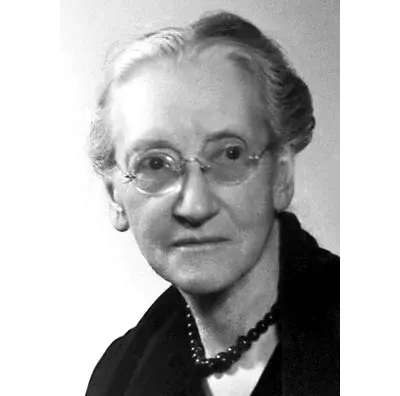
Emily Greene Balch was an American economist, sociologist and pacifist. Balch combined an academic career at Wellesley College with a long-standing interest in social issues such as poverty, child labor, and immigration, as well as settlement work to uplift poor immigrants and reduce juvenile delinquency.
