Herbert Greenfield Quotes
Thicken Population.
Herbert Greenfield, *, Premier of Alberta, Canada, 1925
Sourced by: Eigen's Political and Historical Quotations

See {621891} for a similar view.


At the time most people did not realize that the ability of a nation or land area to support a population was dependent more on agricultural and industrial productivity than on population size. In the most affluent and developed countries, land outside of the cities is quite affordable and available, whereas in poor, underdeveloped nations, land distribution and reform is still a factor. The majority of citizens of many developed, affluent nations do not own any land.


The French were at the time considered the major barrier to growth and development of the colonies.

This is a counter-intuitive fact which surprises almost everyone. Note that he does not claim that the entire world population could all live in New York, but the enormous amount of indoor space is clearly illustrated by the fact that all could fit in to the city.


In Burundi, family land is divided among the male children of a family. The average Burundian woman has 6.3 children, nearly triple the international fertility rate. With this fertility rate, the plots of land for each person inevitably get smaller and smaller over time. At 10,745 square miles, Burundi is slightly smaller than the U.S. state of Maryland, but it holds nearly twice as many people: about 10 million. The small plots of land are inefficient to farm and provide subsistence. So the nation was in a crises as there was little industrialization and land was essential for existence for most Burundians. See {35808} and {35809}.


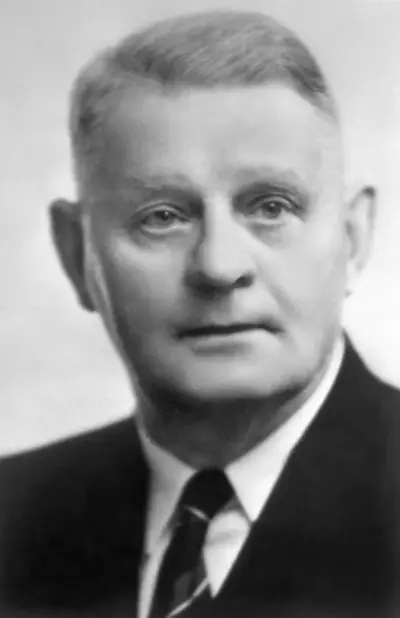
Herbert W. Greenfield was a Canadian politician who served as the fourth Premier of Alberta from 1921 until 1925. Born in Winchester, Hampshire, in England, he immigrated to Canada in his late twenties, settling first in Ontario and then in Alberta, where he farmed. He soon became involved in the United Farmers of Alberta (UFA), a farmers' lobby organization that was in the process of becoming a political party, and was elected as the organization's vice president. Greenfield did not run in the 1921 provincial election, the first provincial general election in which the UFA fielded candidates, but when the UFA won a majority in the Legislature in that election he was chosen by the UFA caucus to serve as Premier.
