John Wayne Quotes
Senator Joseph McCarthy was one of the greatest Americans who ever lived.
Eyman, Scott. John Wayne: The Life and Legend. Simon & Schuster, 2014, p. 433.


McCarthy was in many ways like Donald Trump. One was taht the press loved to cover his statements and accusations that were so absurd and sensational that they sold a lot of nespapers, magazines and obtained many TV / Radio viewers/listeners. As a result he got much more media coverage that he warranted in teh view of many, President Dwight Eisenhower, who generally would not even mention McCarthy's name was percieved by Adlai Stephenson and many others as weak and fearful of McCarthy, Tannenhous and some other historians believed that fear had nothing to do with it, but that Eisenhower not only chose this as a deliberate strategy, but one that was quite effective.

The organization thought that Franklin D. Roosevelt was surrounded by and influenced by communists, and was destroying America for capitalism, when in reality it was Roosevelt who saved capitalism in America by leading the country out of the Great Depression without any revolution or insurgency and maintaining the basic structure of capitalism. They were so fearful of communism that most Americans thought paranoid and unrealistic. When Roosevelt trounced Alf Landon in the 1936 Presidential election, the Liberty League collapsed.


Even the President was not spared during the McCarthy era. The red scare was so pervasive, that a lunatic fringe ultra right wing organization could call the President a “communist dupe” and be taken seriously be much of the media who were themselves intimidated and might be accused of being communists at any moment. It was a very low point in America’s history.


Seeger had been a member of the Communist Party and had left it in 1950. See {635866}. He was later called before the House UnAmerican Activities Committee and asked to reveal the names of others who had been members. In those days of the red scare and McCarthyism, most people asked to name names and not wanting to do so “took the 5th Amendment” and could not be legally forced to reveal the names. Seeger as a matter of principle refused to plead the 5th Amendment because he was not afraid of incriminating himself and had done nothing criminal anyway. So he, a war veteran of WWII, instead refused to answer {635867} citing his First Amendment right of freedom of association. There was no legal precedent for this, and he was indicted and convicted for Contempt of Congress. However, his conviction was overturned as unconstitutional by the U. S. Federal Appeals court. Seeger had prevailed legally. But in retaliation Seeger was blacklisted and none of the radio of TV networks or Hollywood Studios would allow him (and other blacklisted artists) to appear. Today most Americans view what McCarthy, The Congressional Committee, the networks, and Hollywood studios had done as contemptible.

Reacting to the disarray of the federal government as a result of the activities of Senator Joseph R. McCarthy:
Chambers was prescient and to the regret of the right wing, did not listen to him. The reality was that McCarthy, unscrupulous, mentally unstable and an alcoholic intimidated even his own party members and this one sick and flawed individual intimidated and threatened to entire American political establishment. Although Chambers called for the Republican Conservatives to act, it was the liberals of both parties who finally took him on, exposed him and brought him down.


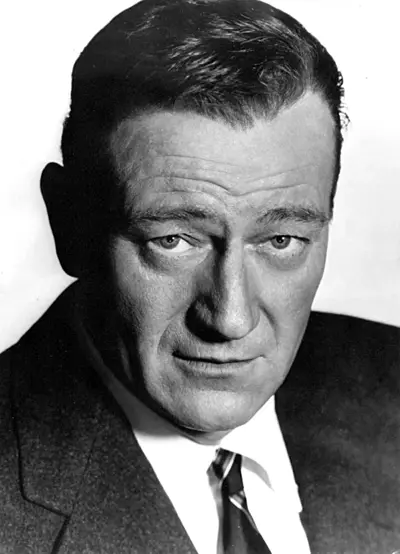
Marion Robert Morrison, known professionally as John Wayne and nicknamed Duke, was an American actor and filmmaker who became a popular icon through his starring roles in Western films. His career spanned from the silent era of the 1920s, through the Golden Age of Hollywood and eventually American New Wave, appearing in a total of 179 film and television productions. He was among the top box office draws for three decades, and appeared with many other important Hollywood stars of his era.
