Bernard Baruch Quotes
Science has taught us how to put the atom to work. But to make it work for good instead of for evil lies in the domain dealing with the principles of human duty. We are now facing a problem more of ethics than physics.
Bernard Baruch, 1870-1965, Businessman & Chairman, War Industries Board, U. S. Delegate to U.N. Atomic Energy Commission, Speech to the United Nations Atomic Energy Commission, June 14, 1946
Sourced by: Eigen's Political and Historical Quotations


This declaration, drafted by Russell and Einstein two days before Einstein’s death was signed by a number of other prominent scientists.

The enriched nuclear fuel could be used to operationalize a nuclear bomb. Iran had a history of using illegal poison gas in the Iraq-Iran War (Both sides used chemical weapons.) Iran had a history of aiding terrorist organizations. And Iran is the only nation belonging to the UN and sighing its charter in modern history that has threatened to destroy another nation via their President whose threats had not been retracted. Iran also is a Shiite Muslim nation and is at odds with the Sunni Muslim countries of the Middle East and if the Iraqis developed a nuclear bomb, there would be a Middle Eastern nuclear arms race. If Iraq would not cease its development program under pressure from other nations, a military attack was the other option. All were indeed ugly.


Under this initiative the US declassified and distributed technical, previously secret information, about atomic science to the world for scientific development. It has been very successful and there are few modern nations that have not benefitted from the program.


The bombing of Tokyo to which she referred, killed over 100,000 Japanese in a single raid, more than each of the two atomic bombs. However, those who, in hindsight, raise the issue of the morality of using the atomic bombs, say nothing about the firebombing. The graphic is of Dr. Libby when she was working with Enrico Fermi to create the first nuclear chain reaction to prove the feasibility of a nuclear bomb. She was the only female on the team.


Rutherford had been the first to split the atom in 1919.

The Iranian religious theocrat of Iran sees the issue as one where the United States is trying to keep nuclear technology from Iran and other Islamic countries. He seems to discount his own often uttered calls for “death to America” and the statements of intended war with the United States by the leading military officer of Iran. See {624408}.


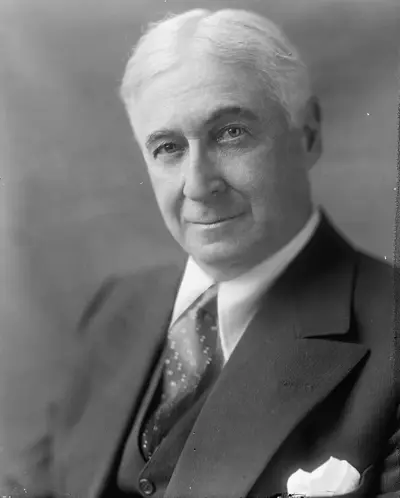
After amassing a fortune on the New York Stock Exchange, he impressed President Woodrow Wilson by managing the nation's economic mobilization in World War I as chairman of the War Industries Board. He advised Wilson during the Paris Peace Conference. He made another fortune in the postwar bull market, but foresaw the Wall Street crash and sold out well in advance. In World War II, he became a close advisor to President Roosevelt on the role of industry in war supply, and he was credited with greatly shortening the production time for tanks and aircraft. Later he helped to develop rehabilitation programs for injured servicemen. In 1946, he was the United States representative to the United Nations Atomic Energy Commission, though his Baruch Plan for international control of atomic energy was rejected by the Soviet Union.
