Harper's Weekly Quotes
Say what we will against the black and brown and yellow men, it has never before been contended that it is in accordance with the spirit of our institutions to seize their lands and to put them under the rule of our President and our Congress.
Harper's Weekly, 1870
Sourced by: Eigen's Political and Historical Quotations


To many, this quotation is shocking. TR was a presidential pioneer in race relations being the first President to ever invite a Black to dine at the White House. See {588996} for his views on Blacks. Although modern and liberal with respect to most minorities, TR had a major blind spot regarding Native Americans and was among the worst racists.


Published 100 years after it was written. This is the first known written statement of what became a de facto policy regarding the American Indian.


The highway was planned to go through a poor neighborhood which had a high percentage of Black residents—all of whom would have to find other housing and move to make room for the highway. If the government plans a highway through a wealthy area, the cost to condemn and pay for the land will be much greater than if a poor neighborhood is acquired. For urban highways, the poor almost always bear a disproportionate share of the inconvenience while the major benefit inures to the wealthy and middle class. Abbot had been a labor organizer and a professional artist before he entered politics. The graphic is of his famous poster which by itself stopped the plans to build the highway very quickly.

this is a joke Tutu has used, but variants of it exist which are not original to him.

Carson was one of the few Indian Agents who spent every penny of his budget on the Indians as opposed to himself. He was married to an Indian woman and was close enough to many Indians that he understood their resentment whenever they came into a town. They were treated terribly and while most of them were literally starving, seeing the white opulence produced resentment.


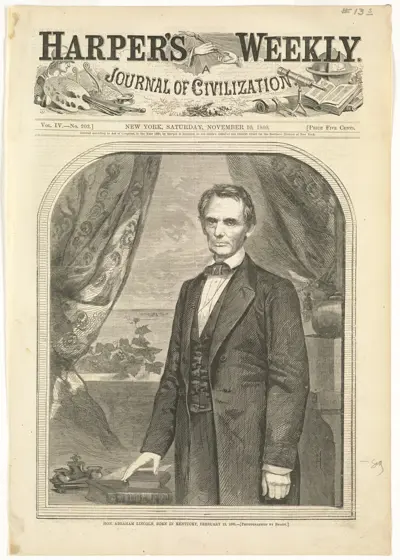
Harper's Weekly, A Journal of Civilization was an American political magazine based in New York City. Published by Harper & Brothers from 1857 until 1916, it featured foreign and domestic news, fiction, essays on many subjects, and humor, alongside illustrations. It carried extensive coverage of the American Civil War, including many illustrations of events from the war. During its most influential period, it was the forum of the political cartoonist Thomas Nast.
