Robert Byrd Quotes
[Referring to immigrants:] They're all over the place, and they don't speak English. Do we want more of this?
The senator later apologized for this remark.
Robert Byrd, 1917-2010, U. S. Congressman & U. S. Senator (Democrat, WV), Senate Majority & Minority Leader, Senate Debate, June 25, 1992
Sourced by: Eigen's Political and Historical Quotations


Although generally a supporter of immigration, he began to oppose it when the very large numbers of immigrants who were ethnically and culturally different began to enter the United States. Northern Italians were OK but the Southern Italians were from a different social class. German Jews had made great contributions to America but the Russian Jews were peasants and serfs. Polish immigrants also. Walker was worried that for the first time in America there would be a social class division as the historical difference between rich and poor in America he believed was within ethnic groups and not between them.

He was referring to North African and other third world immigrants. France’s second largest ethnic group had become Muslims from North Africa. But they were only 10 percent of the population.

The Christian Evangelicals in America have been split on their views of immigration. See {632917} for an example of a contrary position.

This quotation became a very polarizing stimulus in the country with anti-immigration people using it in support of their program to restrict immigration and with liberals and Hispanic groups who saw the quotation as a discriminatory unfounded charge.


The party is a neo-Nazi party for who, race was a major issue.

This is a complaint similar to that made by anti-immigrant Americans. France, like most other countries of the world, has never had the large scale immigration of today, nor have they had such a large proportion of the same ethnicity at once—in this case, Muslim North Africans. There were never, before the last decades, enough immigrants of any ethnicity in France to have a choice of maintaining their traditional languages and culture and not learning French or otherwise assimilating. America, in contrast, had large immigrations of different ethnicities, and despite the erroneous beliefs of immigration opponents, these blocs of immigrants have wherever there was sufficient density—usually cities, they maintained their old language and other customs. However, their children and the next generation in almost all cases have abandoned the language and many of the customs of the old country. This was true of the Germans, the Irish, the Italians, the European Jews, the Russian Jews, the Scandinavians’, and the Hispanics with their different cultures.


At the time many Protestant evangelicals viewed Catholics as subversive to the American way of life because of their allegiance to the Pope and parts of Catholic Theology. The Christian Evangelicals in America have been split on their views of immigration. See {632914} for an example of a contrary position.


This relatively rarely quoted statement was made by Roosevelt shortly after he graduated from Harvard and was typical of the upper class racism of the day. This is the same man who would be the first to invite a Negro to dine at the White House despite media and public opinion which castigated his act; the same man who later would have several close Japanese friends and be considered very pro-Oriental. This illustrates how people can grow and develop over time—especially politicians. Many politicians with few prejudices have publicly adopted the in order to pander to populist biases of the time. Roosevelt was the opposite. He started out with the popular racism of the day and as he grew and developed, publicly led with exemplary statements and actions. See {588991} for another of his early racist statements—this one targeting Native Americans.


Most people are very surprised that the great Benjamin Franklin was so narrow-minded at one point in his life. The German immigration almost halted during the Seven Years War, and the influx of Germans to Pennsylvania did not resume at the same rate.

Most immigration reformers want to open immigration more widely. Ward wanted immigration restricted to certain ethnicities and limited. He wanted a uniformity of assimilation and not diversity.

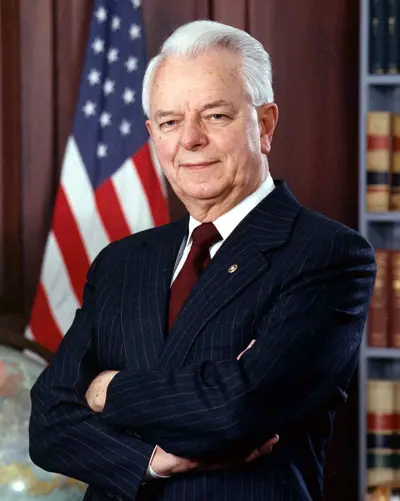
Robert Carlyle Byrd was an American politician who served as a United States Senator from West Virginia for over 51 years, from 1959 until his death in 2010. A member of the Democratic Party, Byrd also served as a U.S. Representative for six years, from 1953 until 1959. He remains the longest-serving U.S. Senator in history; he was the longest-serving member in the history of the United States Congress until surpassed by Representative John Dingell of Michigan. He was the last remaining member of the U.S. Senate to have served during the presidency of Dwight Eisenhower, and he was the last remaining member of Congress to have served during the presidency of Harry S. Truman. Byrd is also the only West Virginian to have served in both chambers of the state legislature and both chambers of Congress.
