Fareed Zakaria Quotes
Western societies will have to focus on the dangers of too rapid cultural change. That might involve some limits on the rate of immigration and on the kinds of immigrants who are permitted to enter.
Fareed Zakaria Populism on the March Foreign Affairs. November/December 2016 Volume 95, Number 6
Sourced by: Eigen's Political and Historical Quotations

This is a complaint similar to that made by anti-immigrant Americans. France, like most other countries of the world, has never had the large scale immigration of today, nor have they had such a large proportion of the same ethnicity at once—in this case, Muslim North Africans. There were never, before the last decades, enough immigrants of any ethnicity in France to have a choice of maintaining their traditional languages and culture and not learning French or otherwise assimilating. America, in contrast, had large immigrations of different ethnicities, and despite the erroneous beliefs of immigration opponents, these blocs of immigrants have wherever there was sufficient density—usually cities, they maintained their old language and other customs. However, their children and the next generation in almost all cases have abandoned the language and many of the customs of the old country. This was true of the Germans, the Irish, the Italians, the European Jews, the Russian Jews, the Scandinavians’, and the Hispanics with their different cultures.

She was referring to the Muslim immigrants who were then coming into Europe in large numbers. Europe in general, and Italy in particular, have never had the American experience of assimilation of large numbers of immigrants, and many Muslims came to Europe just for the economic opportunities but did not like or respect the culture or the values. Some even preached hatred of the Christian West and fomented terrorism. This was different from America where Muslim immigrants arrived and despite the difficulties of new immigrants most thrived and were able to assimilate yet maintain their religion and cultural customs. At the same time many American Islamic immigrants represented the more modern Islamic which valued freedom and pluralism and unlike most Muslim nations of today, appreciated the advanced, modernistic, tolerant Islam of 1000 years ago when tolerance and freedom of thought within an Islamic framework made some Muslim countries the most advanced in the world.


Most people are very surprised that the great Benjamin Franklin was so narrow-minded at one point in his life. The German immigration almost halted during the Seven Years War, and the influx of Germans to Pennsylvania did not resume at the same rate.


He was reacting to the protests and riots of Islamic immigrants who had become a significant minority of France coming mostly from North Africa—especially the former French Colonies where French was spoken and the French educational and legal system were in effect. France, traditionally, has been one of the most open countries to immigrants and minorities however the unwritten cultural norm was that the immigrant would always identify first as a Frenchman, and adopt French language, manners, values and customs. Unlike the United States or Canada where immigrants could easily maintain most of their values, cultural traditions and languages, France required more assimilation to succeed. The Muslim immigrants at the turn of the millennium were not as malleable as other French immigrant groups especially with respect to the treatment of women and the freedom of expression that has always been so valuable to the French. The combination produced misunderstanding, discrimination and far less economic opportunity than other groups of immigrants had previously.

Although Jefferson was a strong immigration enthusiast, he and others were concerned about the ghettoization. The early German immigrants did not universally adopt English, just as today’s immigrants do not all. This was a concern of Americans since the first immigrations. Yet it has always occurred despite concerns about it. However, the second and third generations all become fluent and literate in English.

He and President George W. Bush appreciated the vakue and importance of immigration, but most other Republicans did not.


He was referring to North African and other third world immigrants. France’s second largest ethnic group had become Muslims from North Africa. But they were only 10 percent of the population.

The senator later apologized for this remark.
Most immigration reformers want to open immigration more widely. Ward wanted immigration restricted to certain ethnicities and limited. He wanted a uniformity of assimilation and not diversity.


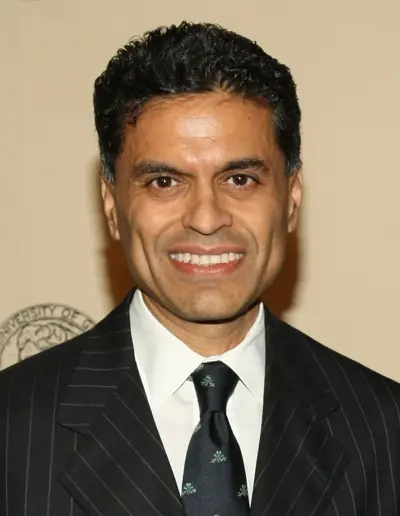
Fareed Rafiq Zakaria is an Indian-American journalist, political commentator, and author. He is the host of CNN's Fareed Zakaria GPS and writes a weekly paid column for The Washington Post. He has been a columnist for Newsweek, editor of Newsweek International, and an editor at large of Time.
