G. H. Hardy Quotes
Reductio ad absurdum, which Euclid loved so much, is one of a mathematician's finest weapons. It is a far finer gambit than any chess play: a chess player may offer the sacrifice of a pawn or even a piece, but a mathematician offers the game.
Hardy, G. H. A Mathematician's Apology. Cambridge University Press, 1967, p. 94.


Mathematical analysis is a much sounder method for determining truth than argument but it only is applicable where the real world fits the mathematical structures that we have which unfortunately is not enough to answer most of the political questions facing us.


3rd Earl Russell of Kingston. In mathematics the numbers can count people, autos, sins, molecules, or paintings. The mathematician does not know or care. And the mathematics is the same regardless. And the fundamentals themselves are unknown. For example, what is a number? It’s not the symbol we write; that is a numeral. Some say that it is an abstract idea that represents a quantity like 5. But what is 5? That itself is an abstraction. So few mathematicians and no layman know what they are talking about when they do mathematics. Lord Russell, with his colleague Whitehead, built up a system where they could define a number as a set with certain properties. But they take 3 large volumes full of equations in a small type font to just get to 3rd grade arithmetic and knowing what they are talking about. In politics, we also often do not know what we are talking about, but that is for a much simpler set of reasons.


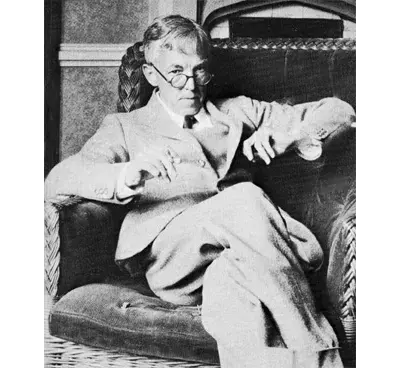
Godfrey Harold Hardy FRS was an English mathematician, known for his achievements in number theory and mathematical analysis. In biology, he is known for the Hardy–Weinberg principle, a basic principle of population genetics.
