Henri Poincare Quotes
Thus, be it understood, to demonstrate a theorem, it is neither necessary nor even advantageous to know what it means.
Poincaré, Henri. The Foundations of Science. Translated by George Bruce Halsted, The Science Press, 1913, p. 449.


Feynman generally emphasized the importance of a scientist understanding the mathematics of his/her subject, especially where nature's complexities abounded. At the time few appreciated the importance in the biological sciences of mathematics which we know today is so essential.


Mathematical analysis is a much sounder method for determining truth than argument but it only is applicable where the real world fits the mathematical structures that we have which unfortunately is not enough to answer most of the political questions facing us.

3rd Earl Russell of Kingston. In mathematics the numbers can count people, autos, sins, molecules, or paintings. The mathematician does not know or care. And the mathematics is the same regardless. And the fundamentals themselves are unknown. For example, what is a number? It’s not the symbol we write; that is a numeral. Some say that it is an abstract idea that represents a quantity like 5. But what is 5? That itself is an abstraction. So few mathematicians and no layman know what they are talking about when they do mathematics. Lord Russell, with his colleague Whitehead, built up a system where they could define a number as a set with certain properties. But they take 3 large volumes full of equations in a small type font to just get to 3rd grade arithmetic and knowing what they are talking about. In politics, we also often do not know what we are talking about, but that is for a much simpler set of reasons.


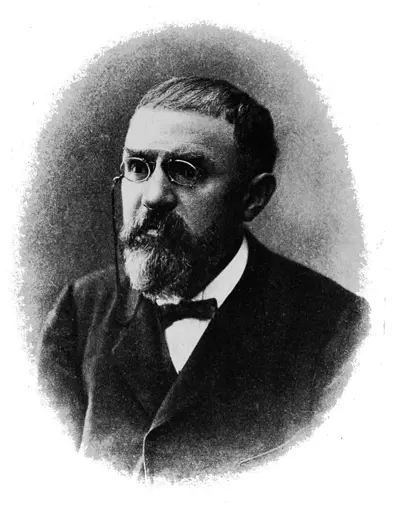
Jules Henri Poincaré was a French mathematician, theoretical physicist, engineer, and philosopher of science. He is often described as a polymath, and in mathematics as "The Last Universalist", since he excelled in all fields of the discipline as it existed during his lifetime.
