David Hume Quotes
When any opinion leads to absurdity, it is certainly false; but it is not certain that an opinion is false because it is of dangerous consequence.
David Hume, 1711-1776, Scottish Philosopher & Historian, An Enquiry Concerning Human Understanding
Sourced by: Eigen's Political and Historical Quotations


This turns out to be very much a cultural phenomenon. Amongst educated Englishmen and many scientists and philosophers from America and other cultures but in some cultures opinions stated without passion are often not believed�this is particularly true in the Middle East but exists in many subcultures of America. In science, and the logical philosophy that Russell was so expert in, either you could prove something or you could not. If you could, the passion was unnecessary. If you could not, it was irrelevant. However, in most political issues, except those based on science, most assertions are not provable and although there may be some evidence for a view, it is not determinative. So volume. Bombast, and passion tries to persuade where logic cannot. Russell and many scientists and Philosophers distrust these statements, but the politician must deal with most of them, as public policy must be made whether the issue is scientifically demonstrable or not. Life and society must go on. However, when scientists testify before Congressional committees or in other political arenas, their lack of passion is taken by many as a lack of conviction or a lack of surety, while if they did speak with great passion, they would break the norms of the scientific community in which they work, for it is regarded as unethical to persuade people with anything but the evidence and logic.

In England and Scotland to this day, the language and accent of a speaker is almost a sure indicator of his/her socioeconomic class. In America this is much less so, and language and accent is more a sign of education than of wealth.


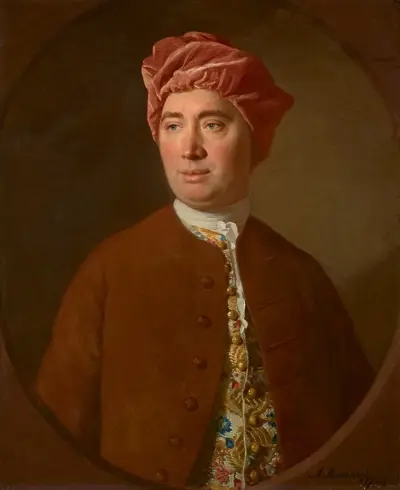
David Hume, Hume strove to create a naturalistic science of man that examined the psychological basis of human nature. Hume argued against the existence of innate ideas, positing that all human knowledge derives solely from experience. This places him with Francis Bacon, Thomas Hobbes, John Locke, and George Berkeley as a British Empiricist.
