Archibald MacLeish Quotes
Races didn't bother the Americans. They were something a lot better than any race. They were a People. They were the first self-constituted, self-declared, self-created People in the history of the world.
Archibald Macleish, 1892-1982, Poet and writer, Assistant Secretary of State, Librarian of Congress
Sourced by: Eigen's Political and Historical Quotations

France had been hit with repeated riots of Muslim and African French citizens and immigrants. Thousands of cars were burned, property damaged and violence of the protesters had injured and killed bystanders. The major complaint was that they were not really accepted as equals in French society. Chirac tried to calm the rioters and prevent a backlash. Although France was a pioneering country in acceptance and tolerance of people of different races and religions, there has always been a strong intolerant segment of French Society that were racist, anti-Semitic and Fascist leaning. Because of the French concept of equality, affirmative action was not legally possible in France so that there was heavy discrimination and even segregation in housing, schools, occupations, and socially. Further, one of the traditional expectations of all immigrants who become French is that they adopt the French language and culture. Like immigrants throughout the world at the end of the 20th century, French immigrants often wanted to maintain their own customs, culture and language—a practice which set them at odds even with otherwise nondiscriminatory Frenchmen and women.

At the time racism and discrimination in the United States was not only rampant but legal. But change in many substrata of America was detectable and many intellectuals--writers, artists, scientists, educators, theologians, entertainers, groups who would later be called “elites” began to make themselves heard on the subject. Falkner was one whose novels had always taken an anti racist view point and now were overtly calling for political and social change.


He persuaded many other rulers to join the Indian Union when India became Independent.


Chautauqua, New York, was a small town in upstate New York that during the summer attracted thousands of people from all parts of the country who were interested in politics and the general condition of society. Major speakers would alternate with discussion groups and debates. It was much like the Aspen Institute except that the costs were very low and many people could afford it.


At the partition if India into Hindu and Muslim States, what is now Bangladesh, was a part of Pakistan called “East Pakistan” by the Pakistani government. While India became a thriving democracy, Pakistan with its combination of military strongmen and Islamic Fundamentalists did not fare as well and became a very corrupt, undemocratic military nation. East Pakistan was not contiguous with the rest of Pakistan and was culturally quite different and less religiously fundamentalist. While all Pakistanis suffered from poor government, the East Pakistanis fared worse. Finally, they developed their own identity which was suppressed by the military dictators of Pakistan and the Banglas revolted and Bangladesh became and independent nation.
The Southern authorities were particularly angry with people form the North coming South to demonstrate over unconstitutional and immoral segregation laws. Northerners were considered as having no business with Southern desegregation. Mrs. Peabody, and the wives of a number of wives of Christian Bishops, black and white, went to a restaurant in St. Augustine and requested service which was contrary to the segregation laws of Florida at the time. The women were arrested. The act of civil disobedience in integrating the restaurant was one act of a planned desegregation strategy worked out with Martin Luther King’s SCLC organization. The mature age of the women and their prominent husbands brought a great deal of newspaper coverage which is just what the demonstrators wanted. The photo is of Mrs. Peabody getting arrested. See {637404} and {637406} for more on this incident.
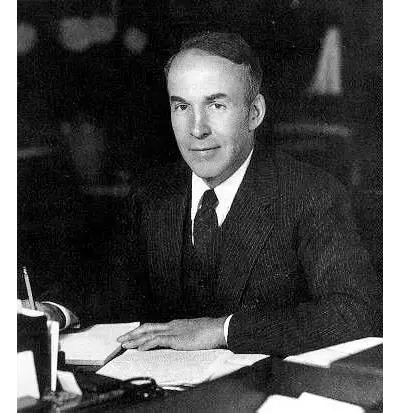
Archibald MacLeish was an American poet and writer, who was associated with the modernist school of poetry. MacLeish studied English at Yale University and law at Harvard University. He enlisted in and saw action during the First World War and lived in Paris in the 1920s. On returning to the United States, he contributed to Henry Luce's magazine Fortune from 1929 to 1938. For five years, MacLeish was the ninth Librarian of Congress, a post he accepted at the urging of President Franklin D. Roosevelt. From 1949 to 1962, he was Boylston Professor of Rhetoric and Oratory at Harvard. He was awarded three Pulitzer Prizes for his work.
