John Jumper Quotes
Present asymmetrical advantages to the enemy before he presents asymmetrical advantages to you.
John Jumper, General and Air Force Chief of Staff, Quadrennial Defense Review, C-SPAN, October16, 2001
Sourced by: Eigen's Political and Historical Quotations


Plan Orange was the code name of the united states plan for possible war with Japan. In this ironic quotation, American military planners realized five years before Pearl Harbor that surprise attack was the major vulnerability. We were surprised and had no help from our intelligence service which despite the recommendations was almost nonexistent.


The “adversary” was Pakistan, which was frequently sending military and terrorist attacks into Kashmire much if which has been disputed by Pakistan ever since the Partition of India in 1949. India had a very disciplined and well led military and like most sophisticated military powers did not immediately retaliate for military incursions despite the public pressure to do so. Instead they gave themselves time to plan and organize the logistics for a series of surgical strikes at the terrorist and/or military concentrations Pakistan had deployed close to the border which they launched several days later.


He was a strong believer in surprise attack and preemption.

The issue of how to raise an army plagued the Founding Fathers. The State Militias had very short enlistment periods so that as soon as the soldiers had been trained and were effective, their enlistments would be up. Washington and others wanted a draft or at least long enlistment periods in an American Army. The debate which then began has never ended. How much regular Army as opposed to the Army Reserves—the equivalent of the State Militias, whether or not there should be a draft, whether or not an enlistment period may be extended if there is a military need—none of these are new issues but have been with us since the country was founded. See {591369} for more of Washington’s view of this issue.


During the presidential debates George W. Bush stated that he would be very hesitant to use the military for nation building around the world. Less than a year later, the Bush administration, faced with the September 11, 2001 terrorist attacks, launched a massive attack on the Taliban regime in Afghanistan. After fighting and winning the war, the military soon realized that they would in fact be involved in nation building. However, with the assistance of the United Nations much of the humanitarian burden was lifted from the U.S. military.


After the Battle of the Wilderness, just before the Battle of Spotsylvania Courthouse, Grant wrote:

Most Americans believed that only the President could authorize a nuclear strike. However, that was not so. This secret memorandum gave many military officers the right to strike if they thought it was an “emergency”. So for example, the Commanding general of the Strategic Air Command could order a nuclear attack if he thought that it was an emergency. The scenario of the film Dr. Strangelove was therefore much more plausible than most people assumed. Individual general officers had a such authority and they could have a mental breakdown or a hyperaggressive personality and philosophy. It is not know how long this non-Presidential nuclear use authority lasted or was expanded or what the secret current status might be.

These tactics were revolutionary in China and the rest of the world. They were unexpected and were very effective. The non communists however were corrupt, exploitative, and divided. The communist revolution in China might well have not succeeded had the capitalist forces not been so corrupt and badly led.


While this principle is usually true, the irony is that it did not hold for the Germans in WWII. Towards the end of the war, they had developed the first jet planes which in combat were far superior to anything the allies could contest them with. In every battle they shot down many more allied plans than they lost. However they had relatively few as allied bombers had destroyed key factories and already killed most of the German experienced pilots. Also the fuel facilities were crippled. So even though the German jets were technologically superior, they were so outnumbered that they were not strategicappy successful.

An irony is that Timosheko used German Prussian traditional military strategy to successfully defend against the German invasion of Russia.
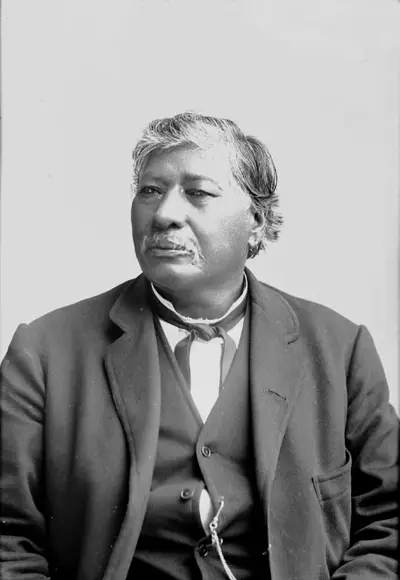
John Jumper was Principal Chief of the Seminole Nation from 1849 to 1865, and again from 1882 to 1885. He was also a Baptist pastor. Jumper led those Seminole who supported the Confederacy, signing a treaty with the new government in the hope of gaining an Indian state if they were successful. He served as a Lieutenant Colonel in the Confederate Army Seminole Mounted Volunteers.
