Winston Churchill Quotes
I do not understand this squeamishness about the use of gas. We have definitely adopted the position at the Peace Conference of arguing in favour of the retention of gas as a permanent method of warfare. It is sheer affectation to lacerate a man with the poisonous fragment of a bursting shell and to boggle at making his eyes water by means of lachrymatory gas. I am strongly in favour of using poisoned gas against uncivilized tribes.
The First World War had recently ended with the mass of horrible casualties that resulted from the use of poison gas. Permanently debilitated veterans were trying to rebuild a life all over England. Many Englishmen wanted to ban English use of poison gas. Churchill objected as the Middle East was a cauldron of various forms of terrorism then in areas that the British were “responsible for” under the Peace Treaty. He argued that there was little difference be gas and shells, but that did not persuade many others. Churchill was outvoted and overruled and the British have never used poison gas since although they had a large supply and were prepared to use it in WWII if the Germans did. This quotation was a blot on Churchill’s reputation. One issue was whether or not it was human to use poison gas. Churchill was willing to say no where white Christians were concerned but was perfectly willing to use them on the “uncivilized”.
Winston Churchill, 1874-1965, British Prime Minister (Conservative), Statement as president of the Air Council, War Office Departmental Minutes, May 12, 1919
Sourced by: Eigen's Political and Historical Quotations

He was the Secretary of State in the War Office at the time. The Royal Air Force had suggested an experiment---gassing “recalcitrant Arabs” from the air. This predated Sadaam Hussein's gassing of Hussein's gassing of his own people by over 70 years.


3rd Earl Russell of Kingston

Almost every use of war weapons of mass destruction in history have been justified with the rationale that the total casualties would be reduced. It sometimes has been such as with the use of the atomic bomb in WWII but usually it has not. The same argument was made incidentally by Dr. Gattling, the inventor of the machine gun. In WWI far more men were killed by machine gun fire than poison gas.


The term “your” referred to the imperialists in America who were supporters of the war in the Philippines. There were some unfortunate atrocities committed by American officers. See General Jacob H. Smith: {42097}.


Ironically Germany which has publicly usually been so sensitive and responsible after their massive chemical extermination in the concentration camps of WWII, was embarrassed by their own private companies which, to make money, sold the chemicals and the technology to the then worst murderer in the world.

A little over a decade later, it was the conservative President who was condemning Saddam Hussein for gassing his own people and justified the Iraq War in part over that. And in 2007 Saddam having been toppled from power, he was tried for this crimes against humanity with the major charge being his gassing of the Iraqi Kurds. He was hanged for the “liberal hate speech” which had turned into conservative hate speech, but was a correct accusation regardless of which political pole was making it. There were few issues where most Americans were as unanimous as Saddam’s guilt in the gassing of the Kurds with Limbaugh and Saddam’s relatives being about the only people who saw it as propaganda.


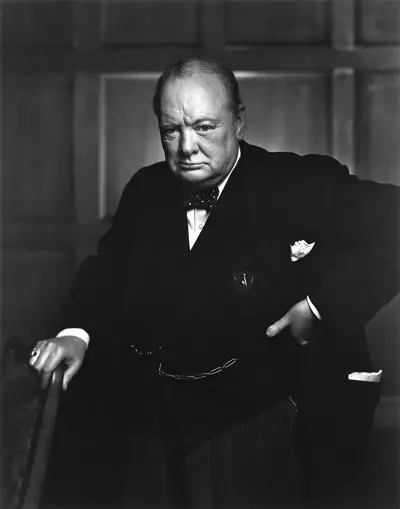
Sir Winston Leonard Spencer Churchill, KG, OM, CH, TD, DL, FRS, RA was the Prime Minister of the United Kingdom from 1940 to 1945, during the Second World War, and again from 1951 to 1955. Apart from two years between 1922 and 1924, Churchill was a Member of Parliament (MP) from 1900 to 1964 and represented a total of five constituencies. Ideologically an economic liberal and imperialist, he was for most of his career a member of the Conservative Party, as leader from 1940 to 1955. He was a member of the Liberal Party from 1904 to 1924. Churchill was also well known for his military career and as a historian, painter and writer, and among his many awards was the Nobel Prize in Literature.
