David Hume Quotes
Parties from principle, especially abstract, speculative principle, are known only to modern times, and are, perhaps, the most extraordinary and unaccountable phenomenon, that has yet appeared in human affairs.
Of the different kinds of political parties, the one that was formed on principles was at that time a new notion. Hume was particularly skeptical of those as the tended not to be as amenable to compromise as parties unified by simple vested material interests.
David Hume, 1711-1776, Scottish Philosopher & Historian, Of Parties in General
Sourced by: Eigen's Political and Historical Quotations

1st Earl of Beaconsfield


At the time the Republican party was a minor, third party and Douglas was disparaging that. While Douglas' general point has held true, the Republicans supplanted the Whigs as the second major party shortly thereafter.


His use of the noun “Democracy” refers not to a form of government but the specific institution of the Democratic Party. Smith, like many of the Founding Fathers was deeply suspicious of political parties. See also {614907}. Smith had written to most of the then likely Presidential candidates of both major parties asking for their position on the Mormons who were facing persecution wherever they went. None of the politicians would make any satisfactory commitments. Smith took Direct Action and became the only major religious official to have run for the Presidency of the United States until Pat Robertson tried and failed in 2000. Smith’s assassination shortly thereafter cut his run for the Presidency short before it made much headway and politically he had no chance to affect the race.

Early political philosophers were very concerned about the conflicts that would be engendered in society by political parties. Many of the Founding Fathers had similar suspicions.

Essentially Trollope claimed that English political parties are by their very nature, conservative, in the sense that they tend to resist great change. This has tended to be true in America and other democracies, but there are a number of exceptions. Where political parties are totally unsuccessful, they have little to lose. Likewise, when a political party becomes overwhelmingly dominant, it tends to overreach and try and make ideological change. However when there is true contest among the parties, they tend to be conservative in the sense that even if they are liberal parties, they do not move in extreme ways.


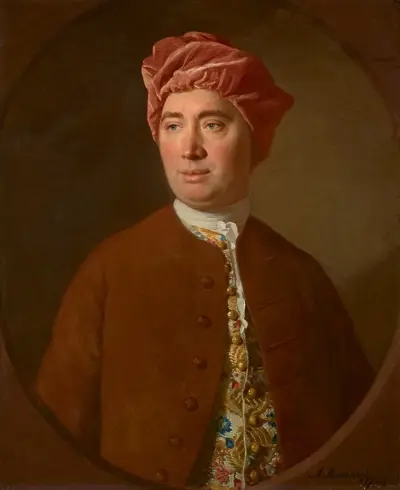
David Hume, Hume strove to create a naturalistic science of man that examined the psychological basis of human nature. Hume argued against the existence of innate ideas, positing that all human knowledge derives solely from experience. This places him with Francis Bacon, Thomas Hobbes, John Locke, and George Berkeley as a British Empiricist.
