Theodore Roosevelt Quotes
Our words must be judged by our deeds; and in striving for a lofty ideal we must use practical methods; and if we cannot attain all at one leap, we must advance towards it step by step, reasonably content so long as we do actually make some progress in the right direction.
Theodore Roosevelt, 1858-1919, 26th President of the United States (Republican, NY Nobel lecture, May 5, 1910
Sourced by: Eigen's Political and Historical Quotations


The extensive disputation of modern democratic legislatures many believe might by improved by adhering more to this principle. The last sentence would be good advice for the modern democratic politician. This is the most formalized and sophisticated compendium of laws of the so-called “barbaric peoples” of Europe. The compilation was in many ways a documentation of the traditional laws of the Visigoths that had evolved over hundreds of years.


See also McCormack s.v. "Negotiation"


She converted to the Catholic Religion and the monarch had to be a Protestant.


Johnson had proposed an extremely strong civil rights bill. Most Washington insiders assumed that he would gain favor amongst fair minded whites and Blacks for making the attempt, but then he would compromise with the Southerners, and water down the bill to something that had little or no teeth. His staff were trying to learn from Johnson, which aspects of the bill he was willing to compromise on assuming that the President could never get Congress to pass the bill in its original form. They were really surprised at the President’s answer and assumed that he could not do it. They were more surprised when he did drive the bill through Congress without any substantive compromises. It was the most powerful and effective Civil Rights legislation passed since Reconstruction a century earlier.


This argument is is usually made by the right wing. However, this quotation is notworthy because it was made by a left wing liberal.
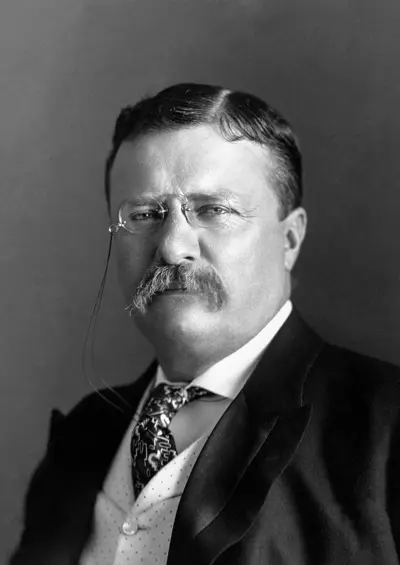
Theodore Roosevelt Jr., often referred to as Teddy or his initials T. R., was an American statesman, conservationist, naturalist, historian, and writer, who served as the 26th president of the United States from 1901 to 1909. He previously served as 33rd governor of New York from 1899 to 1900 and the 25th vice president of the United States from March to September 1901. Roosevelt emerged as a leader of the Republican Party and became a driving force for anti-trust and Progressive policies.
