Visigoths Quotes
The maker of laws should not practice disputation, but should administer justice. Nor is it fitting that he should appear to have framed the law by contention, but in an orderly manner. For the transaction of public affairs does not demand, as a reward of his labors, the clamor of theatrical applause, but the law destined for the salvation of the people., The framer of laws and the dispenser of justice should prefer morals to eloquence, that his speech may be characterized rather by virtuous sentiments, than by elegance of expression. He should be more eminent for deeds than for words; and should discharge his duties rather with alacrity than with reluctance, and not, as it were, under compulsion
The extensive disputation of modern democratic legislatures many believe might by improved by adhering more to this principle. The last sentence would be good advice for the modern democratic politician. This is the most formalized and sophisticated compendium of laws of the so-called “barbaric peoples” of Europe. The compilation was in many ways a documentation of the traditional laws of the Visigoths that had evolved over hundreds of years.
Visigothic Code, Forum Judicum, Legal Compilation of the laws of the Spanish Visigoths, ~650
Sourced by: Eigen's Political and Historical Quotations


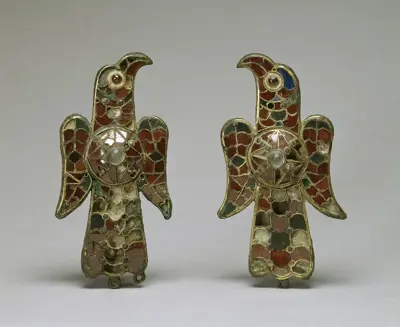
The Visigoths (/ˈvɪzɪɡɒθs/; Latin: Visigothi, Wisigothi, Vesi, Visi, Wesi, Wisi) were an early Germanic people who, along with the Ostrogoths, constituted the two major political entities of the Goths within the Roman Empire in Late Antiquity, or what is known as the Migration Period. The Visigoths emerged from earlier Gothic groups, including a large group of Thervingi, who had moved into the Roman Empire beginning in 376 and had played a major role in defeating the Romans at the Battle of Adrianople in 378. Relations between the Romans and the Visigoths were variable, alternately warring with one another and making treaties when convenient. Under their first leader, Alaric I, they invaded Italy and sacked Rome in August 410. Afterwards, they began settling down, first in southern Gaul and eventually in Hispania, where they founded the Visigothic Kingdom and maintained a presence from the 5th to the 8th centuries AD.
