George F. Kennan Quotes
Our opposition to Communist expansion is not an absolute factor; containment must be taken in relation to American security and American objectives.
George F. Kennan, 1904-2005, Historian & U.S. Ambassador to Russia and Yugoslavia 1947
Sourced by: Eigen's Political and Historical Quotations

The occasion was the visit to Washington of French Minister M. Jean Letourneau. The French were fighting the communists in Vietnam and the U. S., not yet in the fight, promised material and political aid, but no military participation. It was almost a decade later that America sent its first military personnel to Vietnam. The West was persuaded that the French could handle the situation. When they were defeated, America and Britain assumed that it was the notorious military incompetence of the French that accounted for the situation rather than the competence and commitment of the Vietnamese Communists and their support of the majority of the people.

At the time, the Red Scare was prevalent and many Americans were terrified of communists. It was a very effective political tactic to imply that an opponent was a communist or communist sympathizer. For another harsh smear of Stevenson, see {619523}.


He was referring to the Early Cold War. The American official position and propaganda called for Russian military and political control of Eastern Europe to end and supported uprising and revolution, but the U. S. did not have the power to dislodge Russia without risking a nuclear war.


Ironically, at the time she wrote this column, Mrs. Roosevelt was being accused of being a communist by some Southerners who associated her strong views against racism and segregation. Some in the North thought she was a communist because of her active role in the New Deal, Yet here she was, willing to use military force to prevent Soviet expansion.


Most American felt that way at the time of the Russian occupation and the Mujahedeen resistance.

There were many who thought that the Russians would view the Mutual Security Act as aggressive and they might respond with some kind of aggressive retaliation and this could lead to war. Others felt that containment would reduce the likelihood of war.


This quotation illustrates White’s extreme naivety about Stalinist Russia. At the time the Soviet Union had been backing communist insurgencies blatantly in China, Greece, and Korea for example. Most historians agree that White passed classified information to the Russians. He was accused of being a Communist, but there was never any evidence of that. Some people believe that he was a spy for the Russians and committed espionage, but others disagree observing that White was very much his own man and felt that much information that was classified never should have been. White substituted his own judgment, it is believed, about what could be given to the Russians. He was an admirer of what Russian socialism had accomplished economically, educationally and medically since the 1917 revolution deposing the Czar. Russia had been a valuable military ally, which had taken the brunt of both military and civilian casualties in WWII. White’s economics were certainly not Marxist but very much Keynesian. He was subpoenaed by the House Un-American Activities Committee where he was accused of being a Communist which he denied (see {634907}). He died of a heart attack 3 days later.
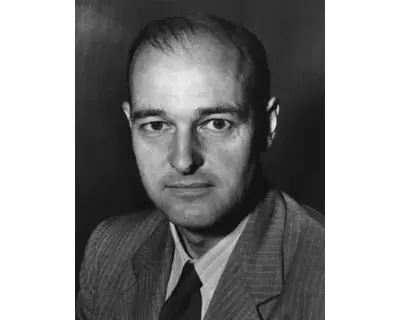
George Frost Kennan was an American diplomat and historian. He was best known as an advocate of a policy of containment of Soviet expansion during the Cold War. He lectured widely and wrote scholarly histories of the relations between the USSR and the United States. He was also one of the group of foreign policy elders known as "The Wise Men".
