James Jackson Quotes
Our constitution, sir, is like a vessel just launched, and lying at the wharf, she is untried, you can hardly discover any one of her properties; it is not known how she will answer her helm, or lay her course; whether she will bear in safety the precious freight to be deposited in her hold. But, in this state, will the prudent merchant attempt alterations? Will he employ two thousand workmen to tear off the planking and take asunder the frame? He certainly will not. Let us gentlemen, fit out our vessel, set up her masts, and expand her sails, and be guided by the experiment in our alterations. If she sails upon an uneven keel, let us right her by adding weight where it is wanting. In this way, we may remedy her defects to the satisfaction of all concerned; but if we proceed now to make alterations, we may deface a beauty, or deform a well proportioned piece of workmanship ... .
The metaphor of the “ship of state” was very common for governments of the era when basic nautical concepts were known to most educated people.
James Jackson, 1757-1806, U. S. Congressman & Senator (GA), House Debate, June 8, 1789
Sourced by: Eigen's Political and Historical Quotations


The Bill of Rights only has 10 amendments. These are the two that did not get ratified by the states.

There are some conservatives who accused Brennan of altering the Constitution from the bench by his opinions. However, there is an unending debate as to how the constitutional interpreters should deal with concepts and reality that did not exist at the time of the Constitutional Convention and were unconcieved of. Some justices like Brennan believe that the principles of the Constitution should be extended and extrapolated to modernity. Others believe that in the absen?ce of specific language even Supreme Court just should not try and extrapolate. Both are reputable views and as time and technology march ahead, the issue is joined more frequently. For example, the Founding Fathers did not conceive of atomic weapons. But they insisted that Americans have the right to bear arms. An atomic bomb is a type of arm—a weapon of war and defense. Does an individual American have the right to have his own atomic bomb?

From this quotation, {615902} and {615901} it is clear that the framers of the Constitution intended the treaty making powers to be shared by the President and the Senate. In practice, in modern times treaties are usually initially negotiated by diplomats under the supervision of the President and the Senate gets to concur or not in the ratification process. However, there have been a number of treaty failures including the League of Nations where the lack of coordination has resulted in a situation where the Senate had to accept or reject something which the President had negotiated and the Senate rejected the treaty.

The Chinese had a custom of binding the feet of female young children so that they would never grow large. Small feet were considered beautiful. However, the woman was almost crippled by the process and could barely walk.


Franklin wrote the speech, but was too old and ill to deliver it personally. James Wilson of Pennsylvania did the honors for him.


Powell was the Secretary of State and Addington kept advising the administration that as long as the President was acting in defense of the country in his capacity as Commander in Chief, he did not have to obey any existing laws that had been Constitutionally passed which in the opinion of the President restricted or limited the President or the executive branch. Addington was an attorney and Assistant to the Vice President, but he was given much responsibility for administration policy. Powell the Secretary of State of the Administration could not have disagreed more and although most politicians including Republicans disagreed with the Addington thesis, Powell was one of the few Republicans to criticize the Addington position.

The 21st Amendment, repealing Prohibition after 13 years, was ratified less than a year later.
This proposed Constitutional Amendment was debated just before Abraham Lincoln would take office. The South wanted to tie his hands on the Slavery issue, and wanted to end what had become a constant polarized Congressional debate over slavery. Of course, their idea of ending the debate was to Constitutionally prohibit further attempts to outlaw or otherwise interfere with slavery in the Southern states. A number of Northern members of Congress voted for it realizing that there was little or no chance of obtaining the ratifications of ¾ of the states and they wanted to buy some time for the Southerners to calm down over their fear of Lincoln and his upstart Republican party. The Amendment never obtained the needed votes though a few states did ratify it. Secession and the Civil War mad the amendment moot. The Southern position was so rigid, that they would compromise in no way on the slavery issue, and ended up of course losing more than they ever thought was possible by succeeding. Another reason this proposed amendment is historically important, is that it is yet another strong piece of evidence that the issue of the Civil War was slavery and not differences in political and economic philosophies as many Southerners have claimed since then. If States Rights in general were the great concern, would have been no reason to single out slavery if it were not the major issue. Yet the last phrase, “including that of persons held to labor or service by the laws of said State” does just. Similar evidence is given by the Secession Resolutions of the Southern States and the debates around them. It is clear that slavery was the issue that the South fought over.

This is one of the earliest uses of the “Father of the Country” phrase in describing George Washington. Washington did attend and was elected the Presiding Officer. He only spoke twice. Knox was a close friend and confidant of Washington’s and knew how to stroke Washington’s ego.


Southerners and some others wanted to discriminate and fought civil rights legislation. The excuse they gave for opposition was that the Federal Government was usurping the power of the states to determine what civil rights people of the state would have. Shellabarger made it clear that the civil rights bill would not require ANY rights to be given. It just required that if the states granted rights, they could not discriminate by race as to those rights. But the states were free to decide which rights all citizens of the state would have. See {623473} .


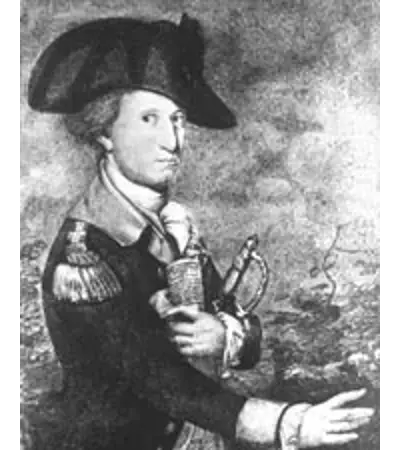
James Jackson was an early British-born Georgia politician of the Democratic-Republican Party. He was a member of the U.S. House of Representatives from 1789 until 1791. He was also a U.S. Senator from Georgia from 1793 to 1795, and from 1801 until his death in 1806. In 1797 he was elected 23rd Governor of Georgia, serving from 1798 to 1801 before returning to the senate.
