William J. Brennan Jr. Quotes
The only way to amend the Constitution … is by the method provided in the Constitution.
There are some conservatives who accused Brennan of altering the Constitution from the bench by his opinions. However, there is an unending debate as to how the constitutional interpreters should deal with concepts and reality that did not exist at the time of the Constitutional Convention and were unconcieved of. Some justices like Brennan believe that the principles of the Constitution should be extended and extrapolated to modernity. Others believe that in the absen?ce of specific language even Supreme Court just should not try and extrapolate. Both are reputable views and as time and technology march ahead, the issue is joined more frequently. For example, the Founding Fathers did not conceive of atomic weapons. But they insisted that Americans have the right to bear arms. An atomic bomb is a type of arm—a weapon of war and defense. Does an individual American have the right to have his own atomic bomb?
William J. Brennan, Jr., 1906-1997, U. S. Supreme Court Justice, Testimony at his Senate Confirmation Hearings
Sourced by: Eigen's Political and Historical Quotations


When the Constitution was presented for ratification there were many who demanded changes before ratification to insure the rights of individuals and States. Others, agreeing that amendments were necessary, argued for passage after ratification. As soon as the Constitution was ratified, the first 10 Amendments—The Bill of Rights—were also passed.


The quotation he gives from the first Chief Justice is from McCulloch v. Maryland, 1819. The issue is one that has divided jurists and politicians ever since the Constitution was ratified was should it be interpreted literally giving credence only to that which the framers specifically intended or as Hughes, Marshall and most modern interpreters believe that the principles should be interpreted in the light of the times. The Founding Fathers never envisaged an Internet or a potential enemy who could kill millions of Americans without sending large contingents of soldiers to our shores.


This president served his terms as allowed by the Constitution but then moved to change the constitution so that he could be the dictator as perpetual president. The purpose of constitutions is to limit and control the day to day political process and processes of reform. This stands the purpose of a constitution on its head. Modern totalitarian states almost all have constitutions. However where they differ from democracies is that the dictatorships ignore their constitutions, constantly suspend them in “emergencies” or change them at will to serve the interests of the ruling authorities. See {622125} for a Supreme Court Justice’s view of this kind of situation.


The Presidential election of 1800 produced a crisis even greater than that of 2000. There was an Electoral College tie between Thomas Jefferson and Aaron Burr—both of the same party, Democratic Republicans. The Federalist Party led by President John Adams had been totally rejected by the voters and Adams was in third place. However, the Federalists saw an opportunity of maintaining the Presidency anyway. The Constitution threw the election into the House of Representatives with each State delegation having a single vote. In the House, the Federalists had parity with Jefferson’s party which resulted in 35 tie votes. Finally, Congressman Bayard, the sole Congressman from Delaware, withheld his vote on the 36th ballot, thereby electing Thomas Jefferson of the opposition party. His reason was:

When asked for his position on abortion, candidate Bush answered:. Nine years later, President Bush proposed a constitutional amendment to overturn the Supreme Court's ruling on flag desecration.

Referring to the Brown v. Board of Education, the Topeka, KS, Supreme Court school desegregation decision:
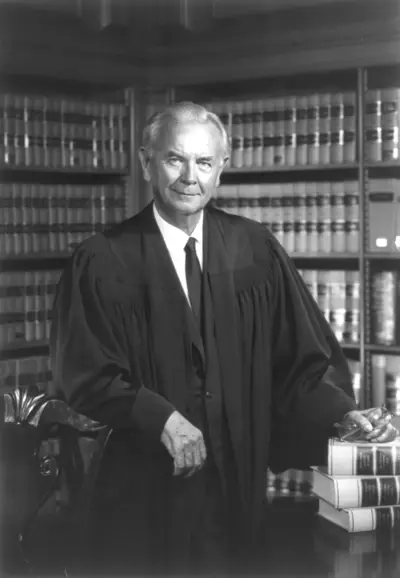
William Joseph Brennan Jr. was an American lawyer and jurist who served as an Associate Justice of the United States Supreme Court from 1956 to 1990. He was the seventh-longest-serving justice in Supreme Court history, and known for being a leader of the Court's liberal wing.
