Virgil Quotes
Others may fashion more smoothly images of bronze (I for one believe it), evoke living faces from marble, plead causes better, trace with a wand the wanderings of the heavens and foretell the rising of stars. But you, Roman, remember to rule the peoples with power (these will be your arts); impose the habit of peace, spare the vanquished and war down the proud!
Virgil. Eclogues. Georgics. Aeneid: Books 1-6. Translated by H. Rushton Fairclough, revised by G. P. Goold, Harvard University Press, 1999, p. 593.


This was the lesson we learned in Iraq and Afghanistan. Unfortunately, American leadership at the time knew little of this quotation.

This was a prevailing philosophical view in England and other monarchies. American Founding Fathers were quite familiar with Hobbes’ works and views and many specifically rejected it. Some of the Federalists wanted to extend some of the traditional prerogatives of monarchy to the American Presidency while the Jeffersonian Republican Democrats wanted the executive treated like any, one else before the law. Today that view generally holds, but there is a vestige of the Hobbes’ view still present in things like Executive Privilege.

Cyrus chose war. But Tomyris and the Massagetai, won and Cyrus was killed in the battle. The famous painter, Rubens, painted the scene of the head of Cyrus being brought to Queen Tomyris.
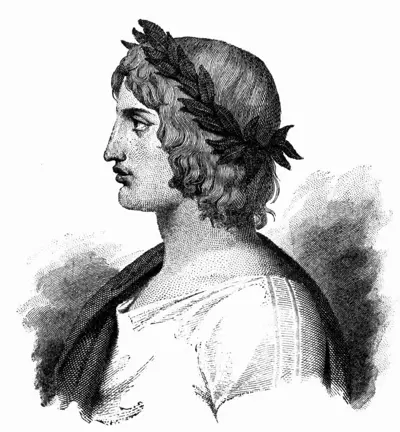
Publius Vergilius Maro, usually called Virgil or Vergil (/ˈvɜːrdʒɪl/ VUR-jil) in English, was an ancient Roman poet of the Augustan period. He wrote three of the most famous poems in Latin literature: the Eclogues (or Bucolics), the Georgics, and the epic Aeneid. A number of minor poems, collected in the Appendix Vergiliana, are sometimes attributed to him as well.
