Christopher Marlowe Quotes
FAUSTUS. Had I as many souls as there be stars, I'd give them all for Mephistophilis. By him I'll be great emperor of the world, And make a bridge thorough the moving air, To pass the ocean with a band of men; I'll join the hills that bind the Afric shore, And make that country continent to Spain, And both contributory to my crown: The Emperor shall not live but by my leave, Nor any potentate of Germany. Now that I have obtain'd what I desir'd, I'll live in speculation of this art, Till Mephistophilis return again.
Marlowe, Christopher. Doctor Faustus. Edited by David Scott Kastan, W. W. Norton & Company, 2005, p. 16.

Xerxes was as the Texans say, “All hat and no cattle.” He had delusions of grandeur and was quite unsuccessful as a conqueror.


William the Conqueror. The King had come ashore and fell forward in the sand on his face and hands. Showing a sense of humor, he hade this statement. Shortly thereafter he took England militarily at Hastings and seized it politically.


McClellan thought President Lincoln an oaf and toyed with the idea of taking over. Ironically, he was a terrible battle general and never would have any reasonable success on the battlefield.


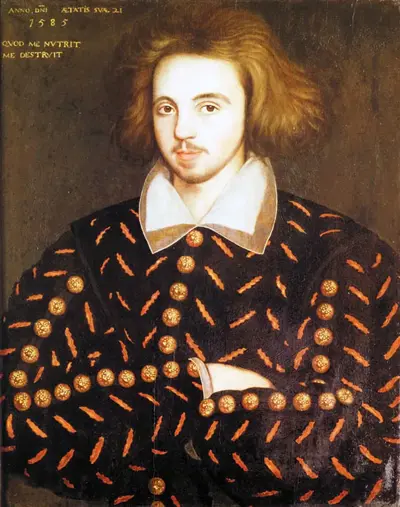
Christopher Marlowe, also known as Kit Marlowe, was an English playwright, poet and translator of the Elizabethan era. Modern scholars count Marlowe among the most famous of the Elizabethan playwrights; based upon the "many imitations" of his play Tamburlaine, they consider him to have been the foremost dramatist in London in the years just before his mysterious early death. Some scholars also believe that he greatly influenced William Shakespeare, who was baptised in the same year as Marlowe and later succeeded him as the pre-eminent Elizabethan playwright. Marlowe was the first to achieve critical notoriety for his use of blank verse, which became the standard for the era. His plays are distinguished by their overreaching protagonists. Themes found within Marlowe's literary works have been noted as humanistic with realistic emotions, which some scholars find difficult to reconcile with Marlowe's "anti-intellectualism" and his catering to the taste of his Elizabethan audiences for generous displays of extreme physical violence, cruelty, and bloodshed.
