Robert M. Gates Quotes
One of the big changes in the Congress since I first came to Washington is that all of these folks go home every weekend. They used to play golf together; their families got to know each other, go to dinner at each other's homes at weekends - and these would be people who were political adversaries.
Gates, Robert M. Duty: Memoirs of a Secretary at War. Alfred A. Knopf, 2014.


Before assuming the presidency in 1933, Franklin Delano Roosevelt and his wife called on President and Mrs. Hoover in the White House. Social custom required that the call be returned, but Roosevelt told the outgoing President, "I realize, Mr. President, that you are extremely busy, so I will understand if you do not return the call." Hoover responded:


In the early years of the Obama Administration, the minority leader of the Senate declared that the object of the Republicans in the Senate was to prevent Obama from being reelected. Therefore, the Republicans used the filibuster to block virtually all legislation. In 2010, the Republicans gained control of the House of Representatives and would not pass any legislation that the President favored lest he get credit for accomplishing something. It had gotten so bad, that even when the President proposed Republican ideas about which everyone agreed, that too was blocked.

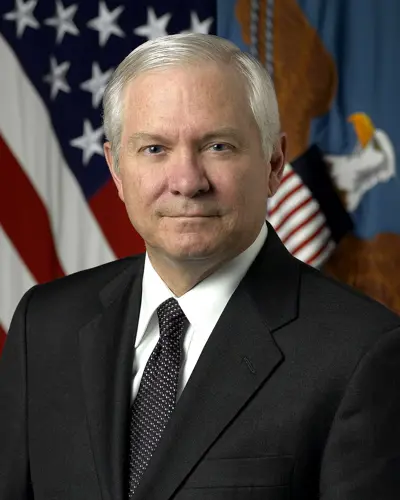
Robert Michael Gates is an American intelligence analyst, and university president who served as the 22nd United States secretary of defense from 2006 to 2011. He was originally appointed by President George W. Bush and was retained for service by President Barack Obama. Gates began his career serving as an officer in the United States Air Force but was quickly recruited by the Central Intelligence Agency (CIA). Gates served for 26 years in the CIA and the National Security Council, and was Director of Central Intelligence under President George H. W. Bush. After leaving the CIA, Gates became president of Texas A&M University and was a member of several corporate boards. Gates served as a member of the Iraq Study Group, the bipartisan commission co-chaired by James A. Baker III and Lee H. Hamilton, that studied the lessons of the Iraq War.
