Deborah Sampson Quotes
On the whole, as we readily acquiesce in the acknowledgment that the field and the cabinet are the proper spheres assigned to our Masters and our Lords, may we also deserve the dignified title and encomium of Mistress and Lady in our kitchens and in our parlours.
Gannett, Deborah Sampson. An Address, Delivered with Applause, at the Federal-Street Theatre, Boston. H. Mann, 1802, p. 26.


This view is very similar to that of some of the religious fundamentalists in America who would oppose most of the other Nazi doctrines.


Most modern feminists would not agree with this quotation by one of the great early femonists.


This 12th century observation which appears so obvious has been ignored by the vast majority of Islamic scholars and writers subsequent until modern times, and even then they represent the small reform minority of Islamic thinking.


Marcus Porcius Cato. This quotation has had two different interpretations over time. One was that women if they received equality of treatment and voting would have an advantage for they also had their traditional “feminine wiles” and their sexuality, hence would dominate men. The second was a also a warning but based on the fact that women were superior in many ways, and given an equal chance, would excel men. The later interpretation is argued by some who point to the 2011 American data that shows more females than males graduating from high school and college, and females outnumber males in medical, law and several other professional schools. With the exception of a few Roman men, most heeded Cato’s warning and never took a chance on female equality.
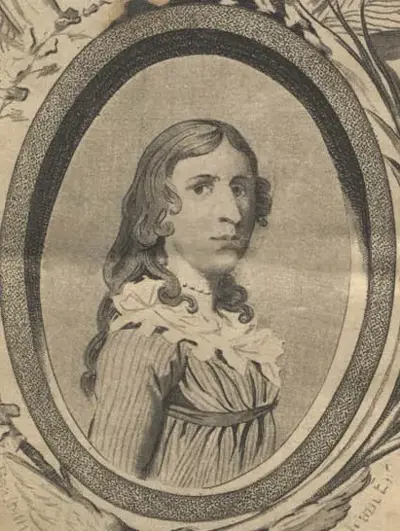
Deborah Sampson Gannett, better known as Deborah Sampson, was a Massachusetts woman who disguised herself as a man in order to serve in the Continental Army during the American Revolutionary War. She is one of a small number of women with a documented record of military combat experience in that war. She served 17 months in the army under the name "Robert Shirtliff" (also spelled in various sources as Shirtliffe and Shurtleff) of Uxbridge, Massachusetts, was wounded in 1782, and was honorably discharged at West Point, New York in 1783.
